
Shelter Bed Management Software: Replacing the Bed-Board Spreadsheet
How domestic violence and emergency shelters move from whiteboards and spreadsheets to a live bed board — with family check-in, waitlists, transfers and the HUD stay data funders require.
Key takeaways
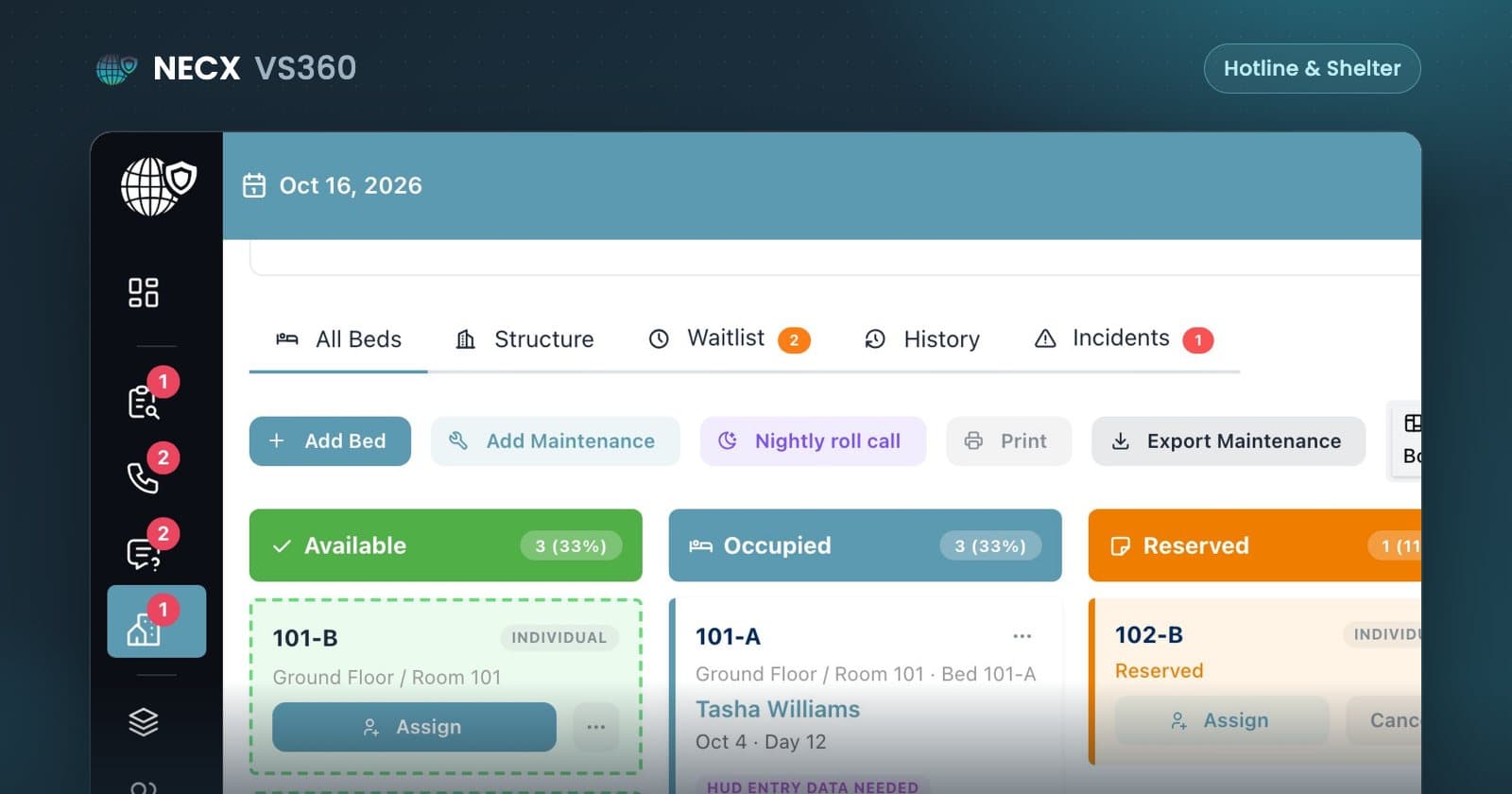
- A live bed board shows every bed's status — occupied, reserved, out of service or available — so staff can answer 'do we have room?' in seconds.
- Checking families in together, with each member linked to the head of household, keeps both placements and HUD household reporting accurate.
- A nightly roll call creates the bed-night records that night-by-night emergency shelters need for length-of-stay reporting.
- Waitlists, transfers between shelters and bed requests from survivors should live in the same system as the bed board, not in email.
On this page
Bed management software gives a domestic violence or emergency shelter a live view of every bed — occupied, reserved, out of service or available — plus family check-in, waitlists, transfers and the HUD stay data funders require.
Many shelters still run on a whiteboard, a spreadsheet, or a shift supervisor's memory. That works until a hotline advocate needs to know at 2 a.m. whether there is room for a mother and three children. Then it fails. Shelter bed management software replaces those tools with one live, shared picture of capacity.
What should bed management software show?
Model the shelter as it really is: locations, floors, rooms and beds. Each bed should show:
- Status: occupied, reserved, out of service (maintenance) or available.
- Who is in it, visible only to roles with permission, and since when.
- History: who used it before, and any maintenance issues.
Confidential locations need extra protection. Flag them so their addresses are hidden from anyone without explicit access.
How should shelters check in families?
Survivors often arrive with children. The system should check in the household together. Each person gets their own bed and links to the head of household. Check-out should capture the exit destination. This one rule keeps your occupancy accurate and your HUD household tables correct.
Waitlists, transfers and requests in one place
- Waitlist with priority and notes, so the next available bed goes to the right family.
- Transfers between rooms, or between partner shelters, with the request and its approval on record.
- Bed requests from survivors through a client app, landing in a queue staff can accept, waitlist or decline.
- Incidents and maintenance logged against the location or bed, so out-of-service beds don't silently shrink capacity.
Nightly roll call and HUD stay data
If your shelter receives HUD funding and uses the night-by-night tracking method, bed nights are how length of stay is calculated. A short nightly roll call in the software creates those records. It also catches stays that should have ended.
Victim service providers collect this HUD data in a comparable database, not HMIS. Our guide to comparable databases and the CoC APR / ESG CAPER covers this in detail.
How NECX VS360 Shelters works
- Locations (including confidential ones), floors, rooms and beds, with a live bed board and bed history.
- Check-in and check-out with families, transfers, incidents, maintenance (with a PDF export) and a waitlist.
- Bed requests from the NECX client app, plus partner shelters and transfer requests.
- HUD stay data at entry, annual assessment and exit, a nightly roll call for bed nights, and Sage-validated APR/CAPER exports.
- The same client record used by the hotline, case management and reporting.
Agencies without shelters simply run VS360 without this module. Book a demo to see the bed board with fictional data.
Frequently asked questions
What is a shelter bed board?
A live view of your shelter's capacity, organized by location, floor, room and bed, showing which beds are occupied, reserved, out of service or available.
How do confidential shelter locations work in software?
Confidential locations should be flagged so their addresses are hidden from anyone without explicit permission, including partner agencies and most hotline staff.
What HUD data does a shelter need to collect?
HUD-funded shelters collect entry data, annual assessments and exit data (including exit destination) for each household member. Night-by-night shelters also record bed nights. Victim service providers keep this in a comparable database rather than HMIS.
Can survivors request a bed from their phone?
With a client app, yes. The request arrives in the shelter queue, where staff can accept it, waitlist it or decline it.
Written by
Victim services & grant compliance specialists
The NECX team builds VS360 alongside victim service agencies, DV/SA programs, shelters and hotlines. We write about the reporting, confidentiality and operational problems we help agencies solve every week.
Keep reading
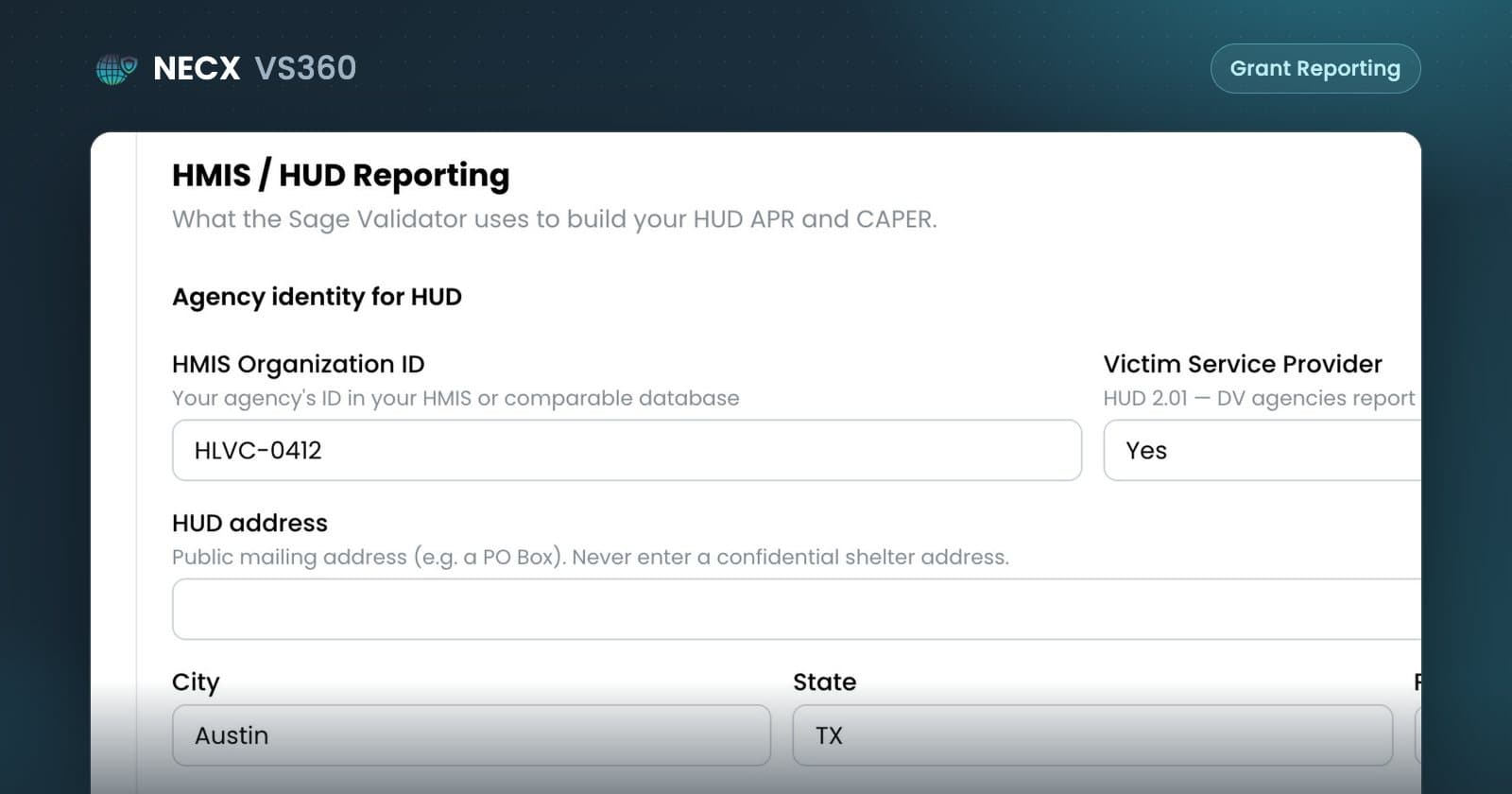
What Is HMIS? The Homeless Management Information System, Explained
A plain-language guide to HMIS: who has to use it, what data goes in, which HUD reports come out, and why domestic violence programs use a comparable database instead.
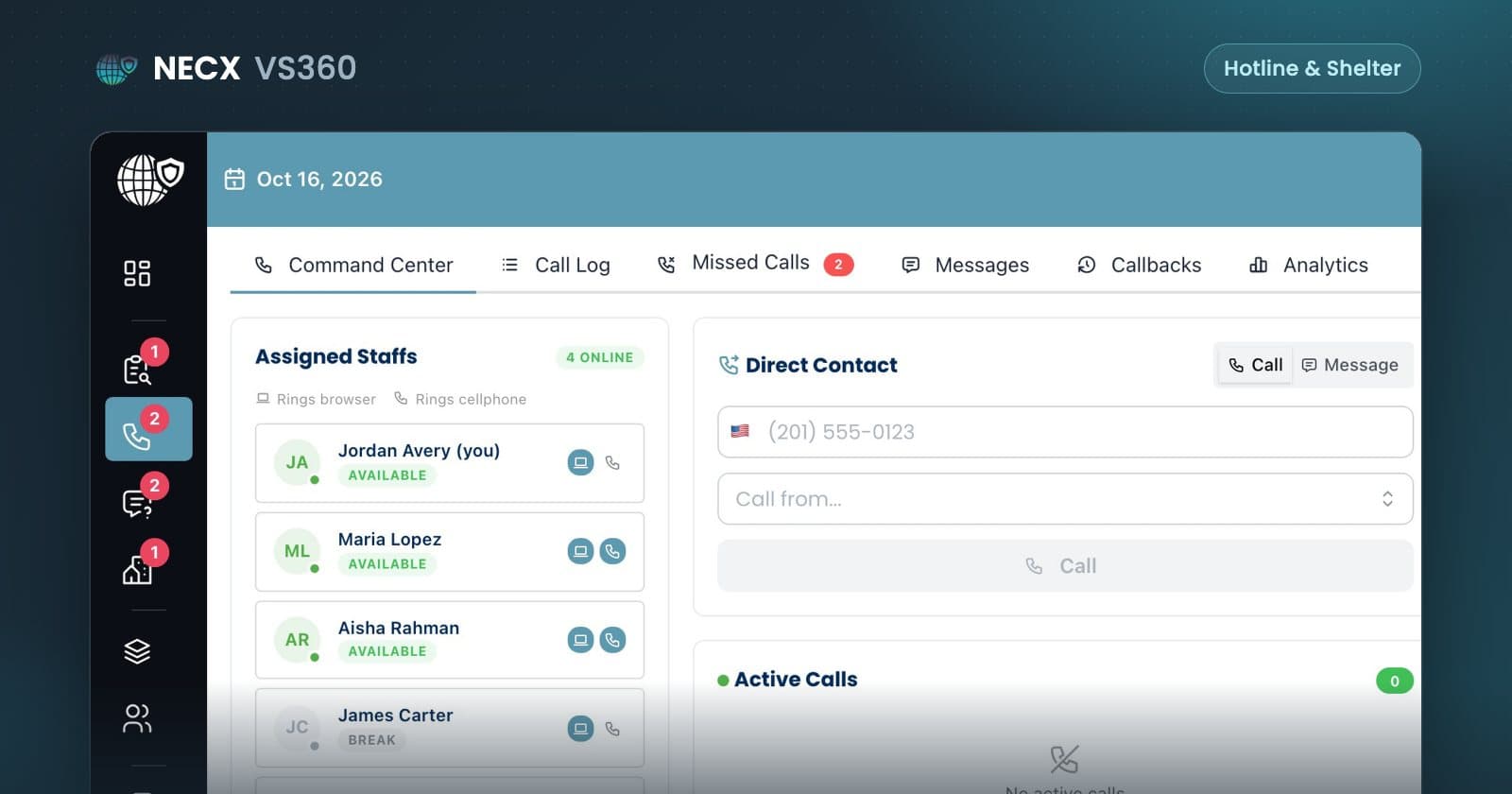
Crisis Hotline Software: What a Modern 24/7 Hotline Platform Should Do
From ringing advocates in the browser to never losing a callback, here is what domestic violence and sexual assault hotlines should expect from crisis hotline software in 2026.
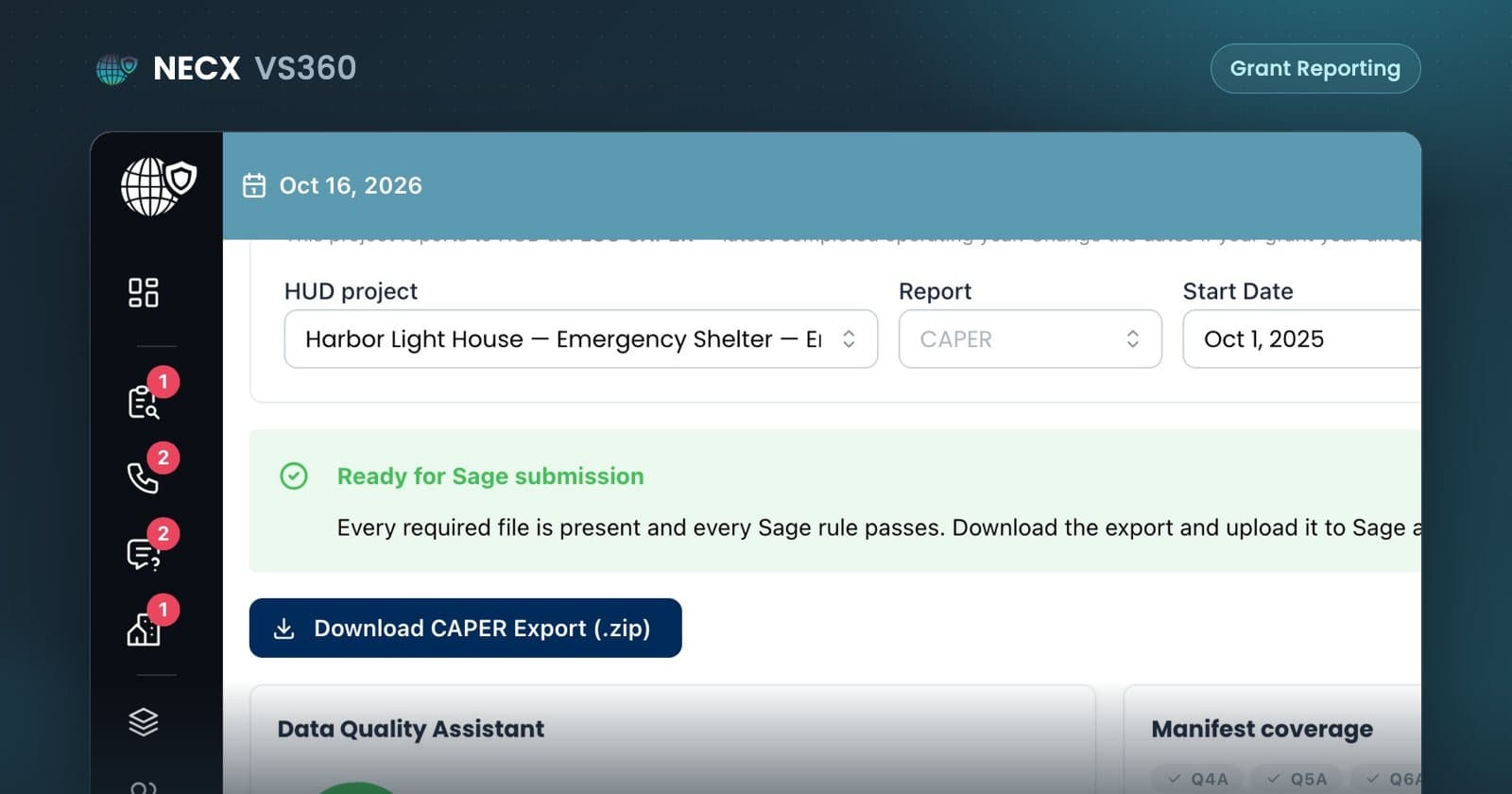
HUD Comparable Databases Explained: CoC APR and ESG CAPER for Victim Service Providers
Why domestic violence and sexual assault programs can't use HMIS, what a HUD comparable database must do, and how to produce a CoC APR or ESG CAPER that passes in Sage.