
What Is HMIS? The Homeless Management Information System, Explained
A plain-language guide to HMIS: who has to use it, what data goes in, which HUD reports come out, and why domestic violence programs use a comparable database instead.
Key takeaways
- HMIS (Homeless Management Information System) is the local database a Continuum of Care uses to record housing and services for people experiencing homelessness.
- Every Continuum of Care must designate an HMIS and an HMIS lead, and HUD-funded homeless projects such as CoC and ESG programs enter client data into it.
- HMIS data must follow HUD's HMIS Data Standards and produces federal reports including the CoC APR, the ESG CAPER and the Longitudinal Systems Analysis.
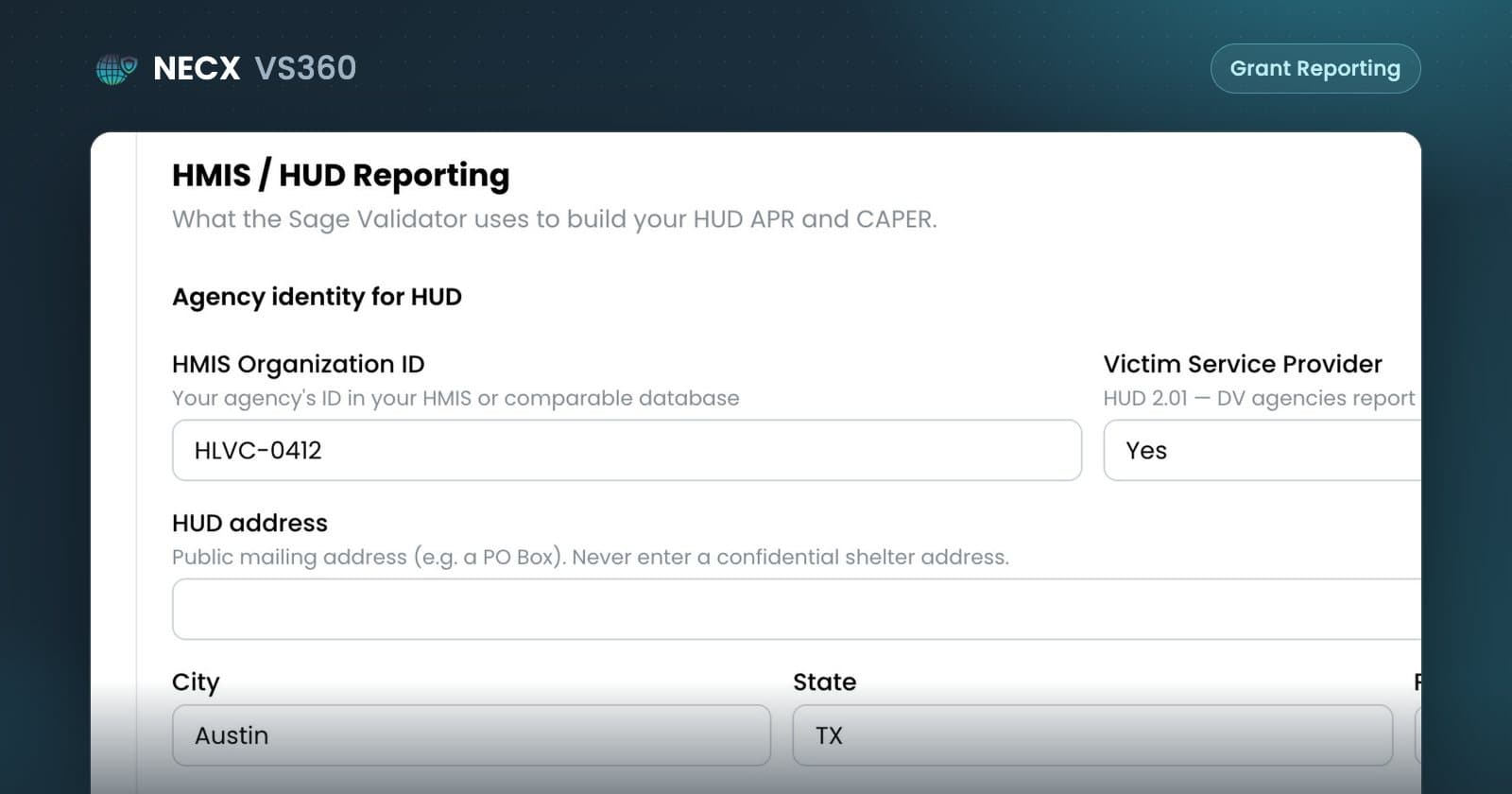
- Victim service providers may not enter survivors' identifying information into HMIS; they use a comparable database that meets the same standards.
On this page
HMIS (Homeless Management Information System) is the local database a Continuum of Care uses to record the housing and services provided to people experiencing, or at risk of, homelessness. HUD requires every Continuum of Care to have one. The data it collects drives the federal reports that keep homeless and housing programs funded.
If you run or fund a shelter, housing program or outreach team, HMIS shapes your daily data entry. If you run a domestic violence program, it shapes what you can't do, because survivors' identifying information can't go into it. This guide covers both.
What is a Homeless Management Information System?
An HMIS is a requirement, not a product. HUD requires each Continuum of Care (CoC) to designate an HMIS and an HMIS lead agency to manage it. The CoC then chooses its software vendor. That's why "HMIS" looks different in every community, and why searches for HMIS so often include a vendor's name.
What every HMIS has in common is the data it must collect. That data follows HUD's HMIS Data Standards, so reports can be compared across communities.
Who has to use HMIS?
- HUD-funded homeless projects, including Continuum of Care (CoC) and Emergency Solutions Grants (ESG) programs.
- Projects funded by federal partners that adopted HMIS for their programs, such as certain HHS and VA homeless programs.
- Non-funded projects that a CoC invites to participate so its data reflects the whole community.
The main exception is victim service providers. Federal confidentiality protections bar them from entering survivors' personally identifying information into a shared HMIS.
What data goes into HMIS?
HMIS data is organized by HUD's Data Standards into three groups:
| Group | Examples |
|---|---|
| Project descriptor data | Project type, CoC code, funding sources, bed and unit inventory |
| Universal data elements | Name, dates of birth, race and ethnicity, project start and exit dates, destination at exit, relationship to head of household |
| Program-specific data elements | Income and benefits, health insurance, disabling conditions, domestic violence history, current living situation |
Every enrollment is a stay with an entry, possible annual assessments and an exit. Night-by-night emergency shelters also record bed nights, which are how length of stay is calculated.
What reports come out of HMIS?
| Report | What it's for |
|---|---|
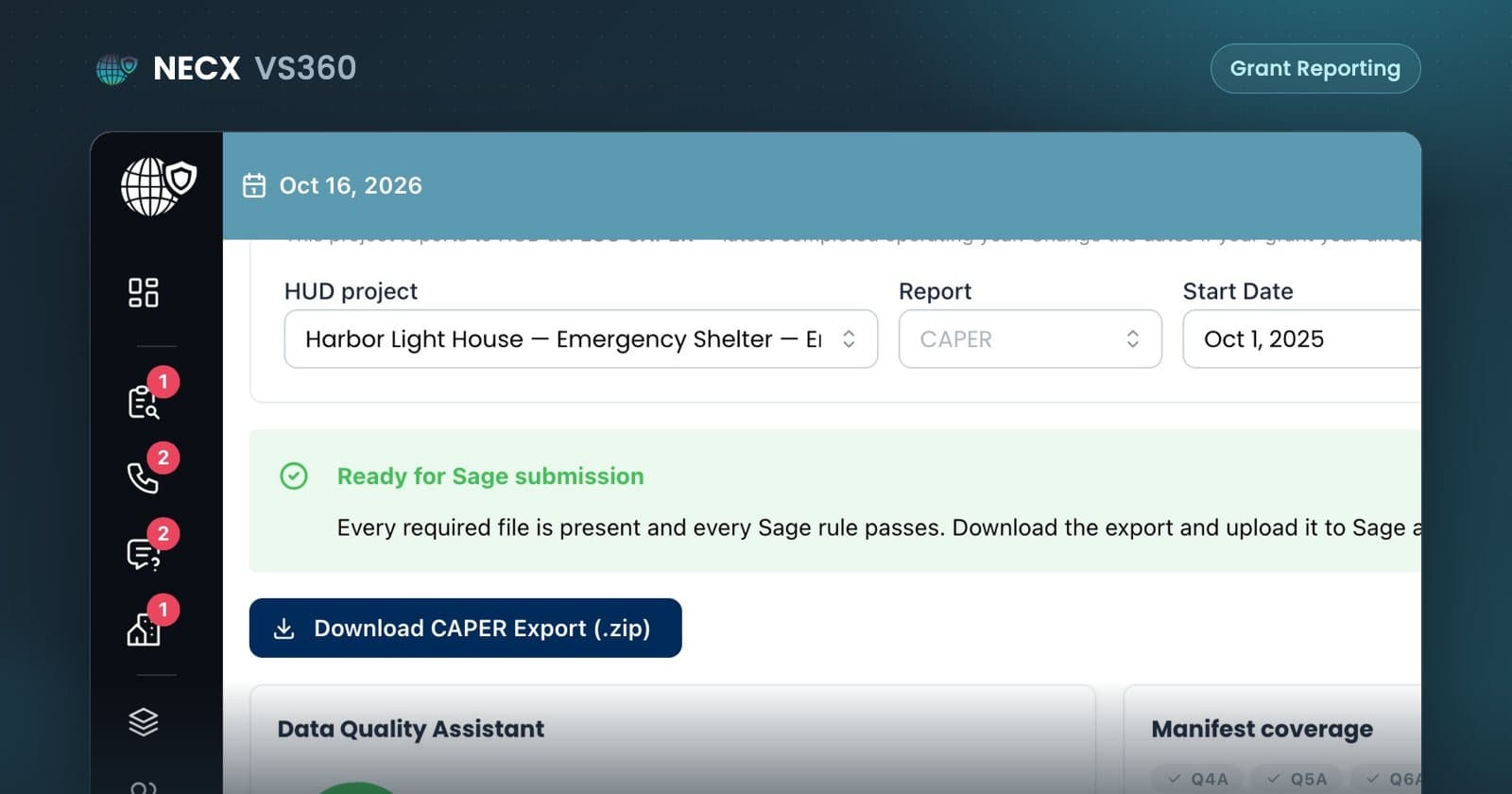
| CoC Annual Performance Report (APR) | Annual results for each CoC Program grant, uploaded to HUD's Sage repository |
| ESG CAPER | Annual results for Emergency Solutions Grants activities, also through Sage |
| System Performance Measures | How well the community as a whole reduces homelessness |
| Longitudinal Systems Analysis (LSA) | Community-level data HUD uses for its reports to Congress |
| Point-in-Time and Housing Inventory counts | The annual snapshot of people and beds |
Data quality decides whether these reports pass. Missing exit destinations, open stays that ended months ago and households entered as separate people are the most common problems.
Why do domestic violence programs use a comparable database?
Victim service providers can't put survivors' identifying information into a shared HMIS. So HUD requires them to use a comparable database: a separate system that collects the same data to the same standards, keeps survivor records under the agency's control, and produces the same aggregate reports.
The Continuum of Care receives only the de-identified, aggregate results. We cover the full workflow in HUD comparable databases explained: CoC APR and ESG CAPER.
HMIS vs. case management software
An HMIS is built around HUD's reporting needs. Day-to-day case work, such as notes, documents, safety planning, referrals and other funders' reports, often lives somewhere else. Agencies that use both end up entering data twice.
For victim service providers, the better answer is a case management system that is the comparable database. Case work and HUD data are then captured once, in the same client record.
How NECX VS360 handles HUD data
NECX VS360 works as a comparable database for victim service providers:
- HUD project setup: project type, CoC, funders, and bed and unit inventory in the agency profile.
- Per-stay HUD data at check-in, annual assessment and exit, plus a nightly roll call for bed nights.
- A Missing HUD Data worklist so gaps are fixed during the year, not at report time.
- HMIS CSV export with a built-in Sage validator, so the CoC APR and ESG CAPER are checked before upload. (HUD doesn't certify or endorse software.)
Running a shelter too? See what bed management software should do.
Further reading
- HUD Exchange — HMIS: Data Standards, CSV specifications and reporting guidance.
- Glossary: HMIS, comparable database, CoC APR, ESG CAPER, Sage
Frequently asked questions
What does HMIS stand for?
HMIS stands for Homeless Management Information System: a local information technology system used to collect client-level data on housing and services provided to people experiencing or at risk of homelessness.
Who is required to use HMIS?
Each Continuum of Care designates an HMIS. Projects funded through HUD's CoC and ESG programs participate, as do projects funded by several federal partners. Victim service providers are the main exception and use a comparable database.
Is HMIS one specific software product?
No. HMIS is a requirement, not a product. Each Continuum of Care selects its own HMIS software vendor, so the system looks different from one community to the next.
Can a domestic violence shelter use HMIS?
A victim service provider may not enter personally identifying information about survivors into a shared HMIS. It must instead use a comparable database that meets HMIS standards and produce the same aggregate reports.
What reports come out of HMIS?
Common outputs include the CoC Annual Performance Report (APR), the ESG CAPER, System Performance Measures, the Longitudinal Systems Analysis (LSA) and data for the annual Point-in-Time and Housing Inventory counts.
Written by
Victim services & grant compliance specialists
The NECX team builds VS360 alongside victim service agencies, DV/SA programs, shelters and hotlines. We write about the reporting, confidentiality and operational problems we help agencies solve every week.
Keep reading
HUD Comparable Databases Explained: CoC APR and ESG CAPER for Victim Service Providers
Why domestic violence and sexual assault programs can't use HMIS, what a HUD comparable database must do, and how to produce a CoC APR or ESG CAPER that passes in Sage.
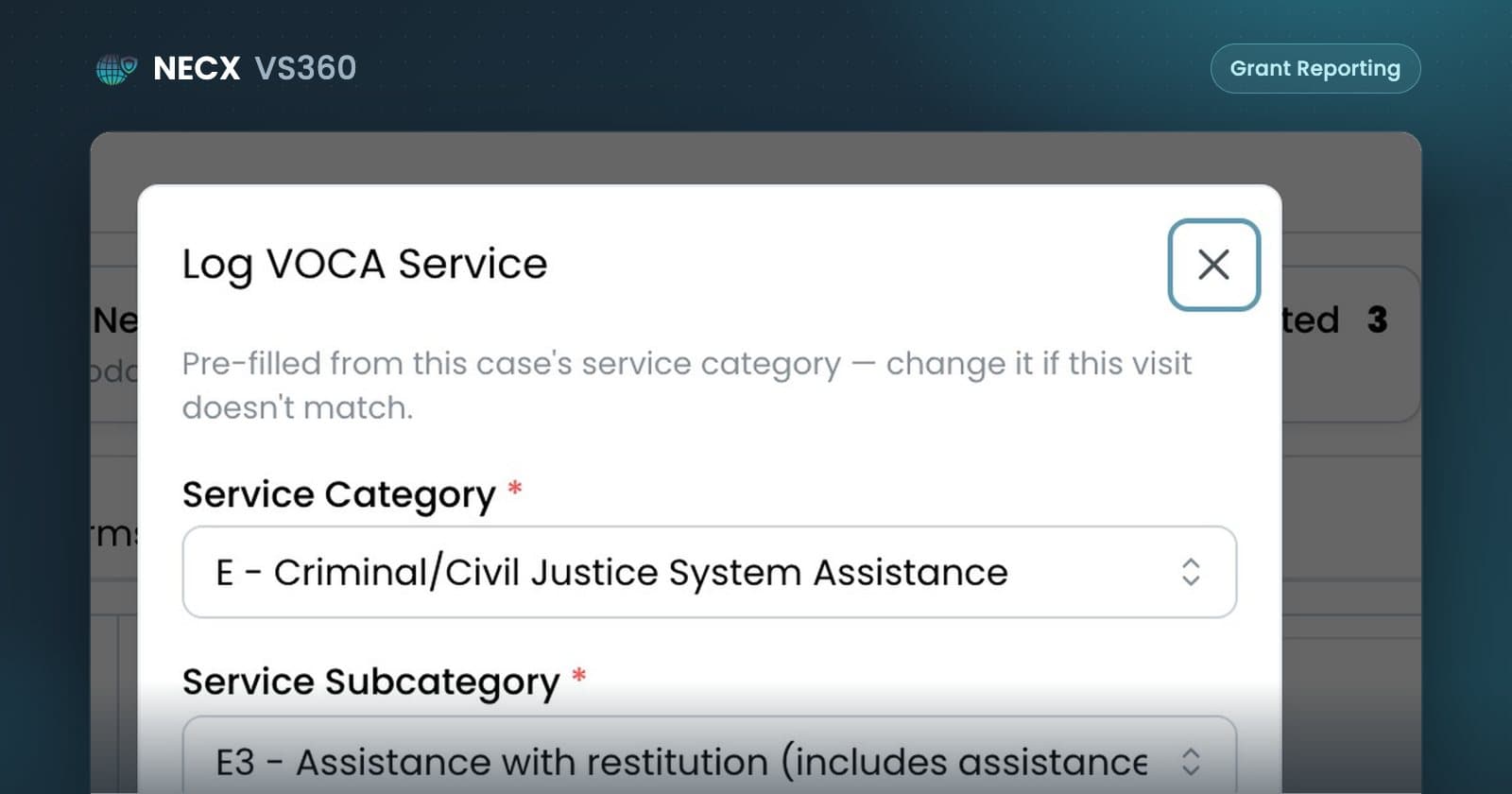
VOCA Grants Explained: How Victim Assistance Funding Works and What It Requires
Where VOCA money comes from, how it reaches local programs, what it pays for, and the reporting and confidentiality rules every VOCA subrecipient has to meet.
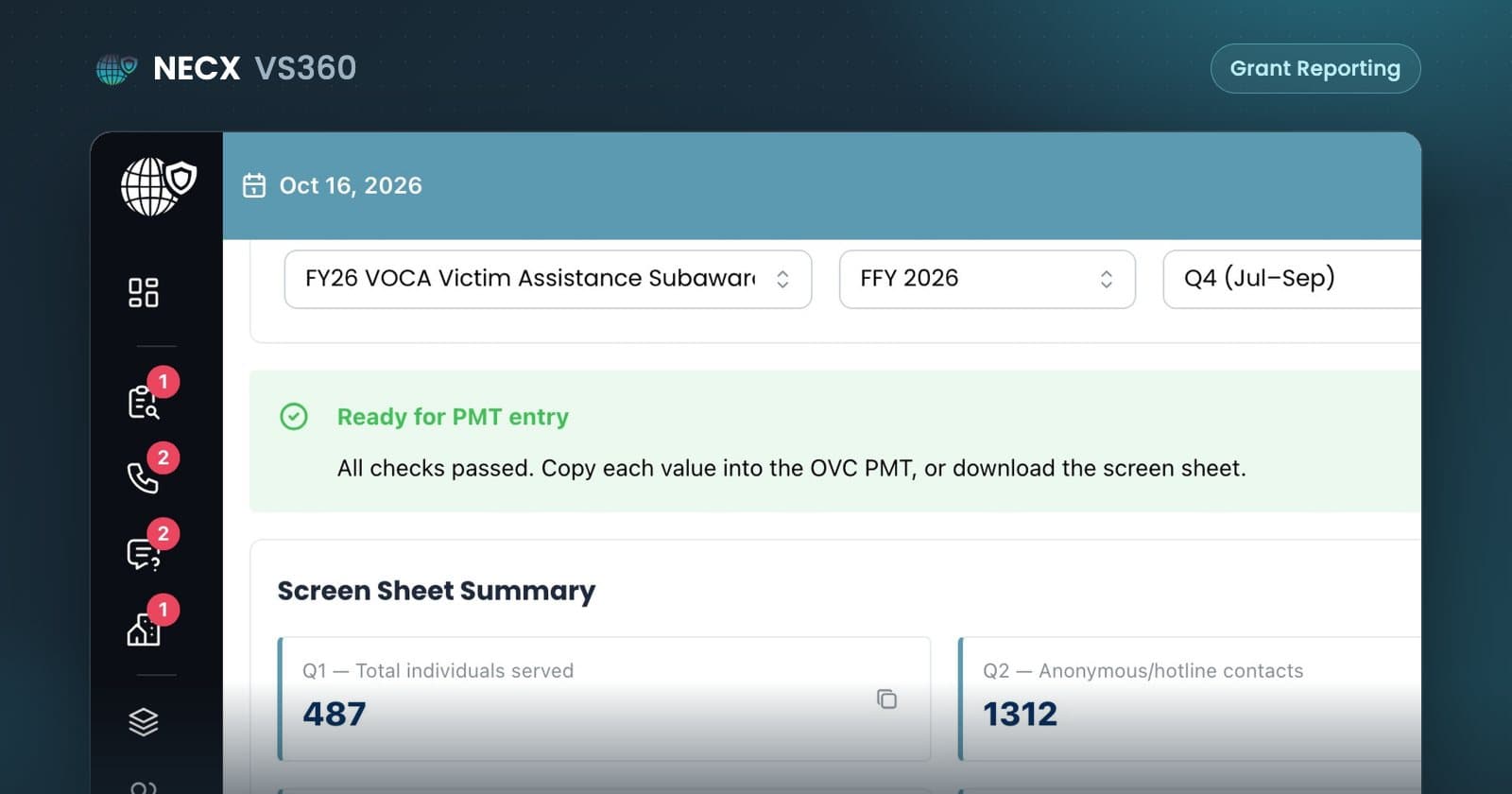
VOCA PMT Reporting: A Practical Quarterly Guide for Victim Service Providers
What VOCA subgrantees report in OVC's Performance Measurement Tool each quarter, the counting mistakes that trigger corrections, and a workflow that keeps the numbers ready before the deadline.