VOCA Grants Explained: How Victim Assistance Funding Works and What It Requires
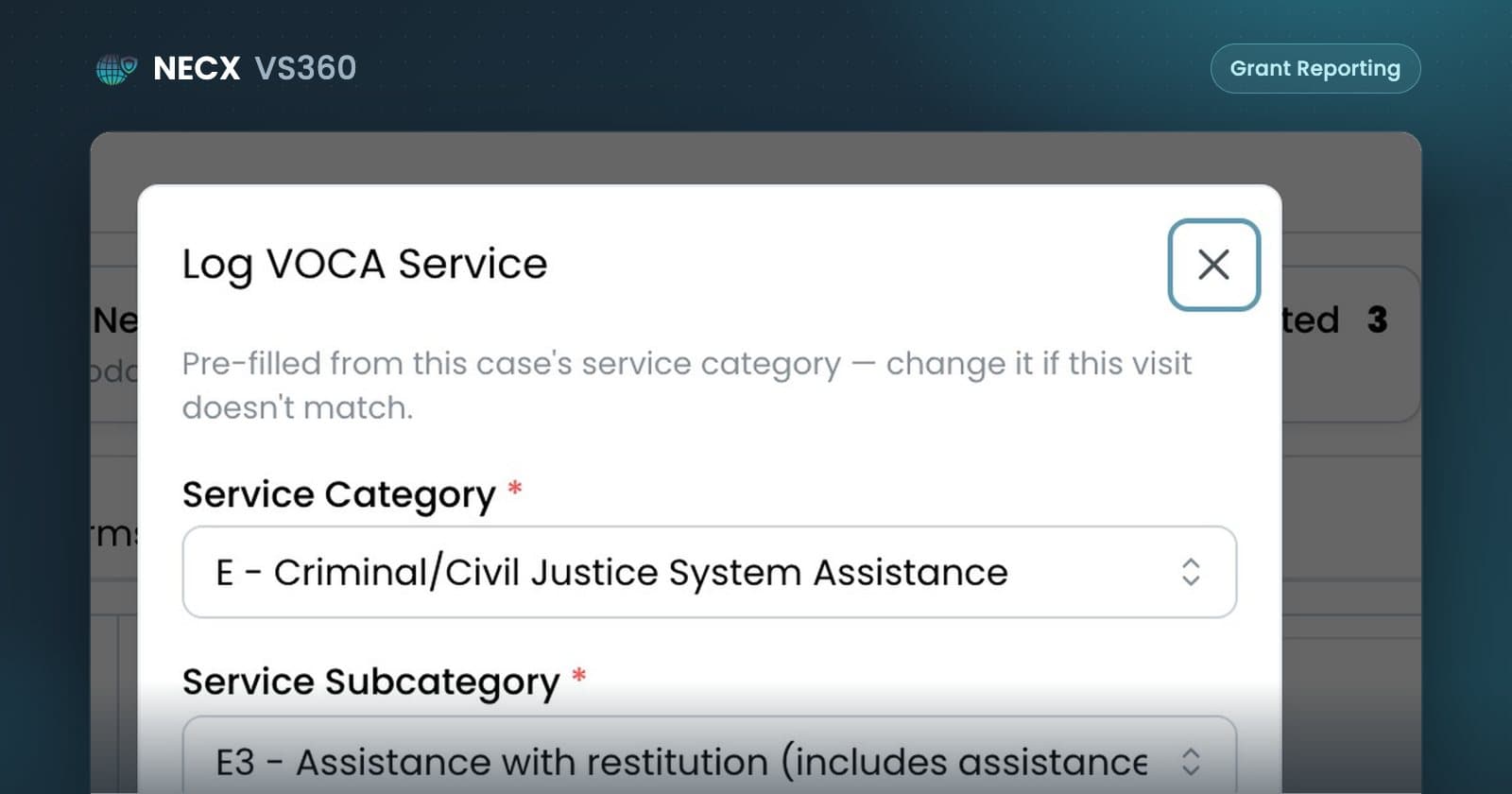
Where VOCA money comes from, how it reaches local programs, what it pays for, and the reporting and confidentiality rules every VOCA subrecipient has to meet.
Victim services & grant compliance specialists
The NECX team builds VS360 alongside victim service agencies, DV/SA programs, shelters and hotlines. We write about the reporting, confidentiality and operational problems we help agencies solve every week.
Where VOCA money comes from, how it reaches local programs, what it pays for, and the reporting and confidentiality rules every VOCA subrecipient has to meet.
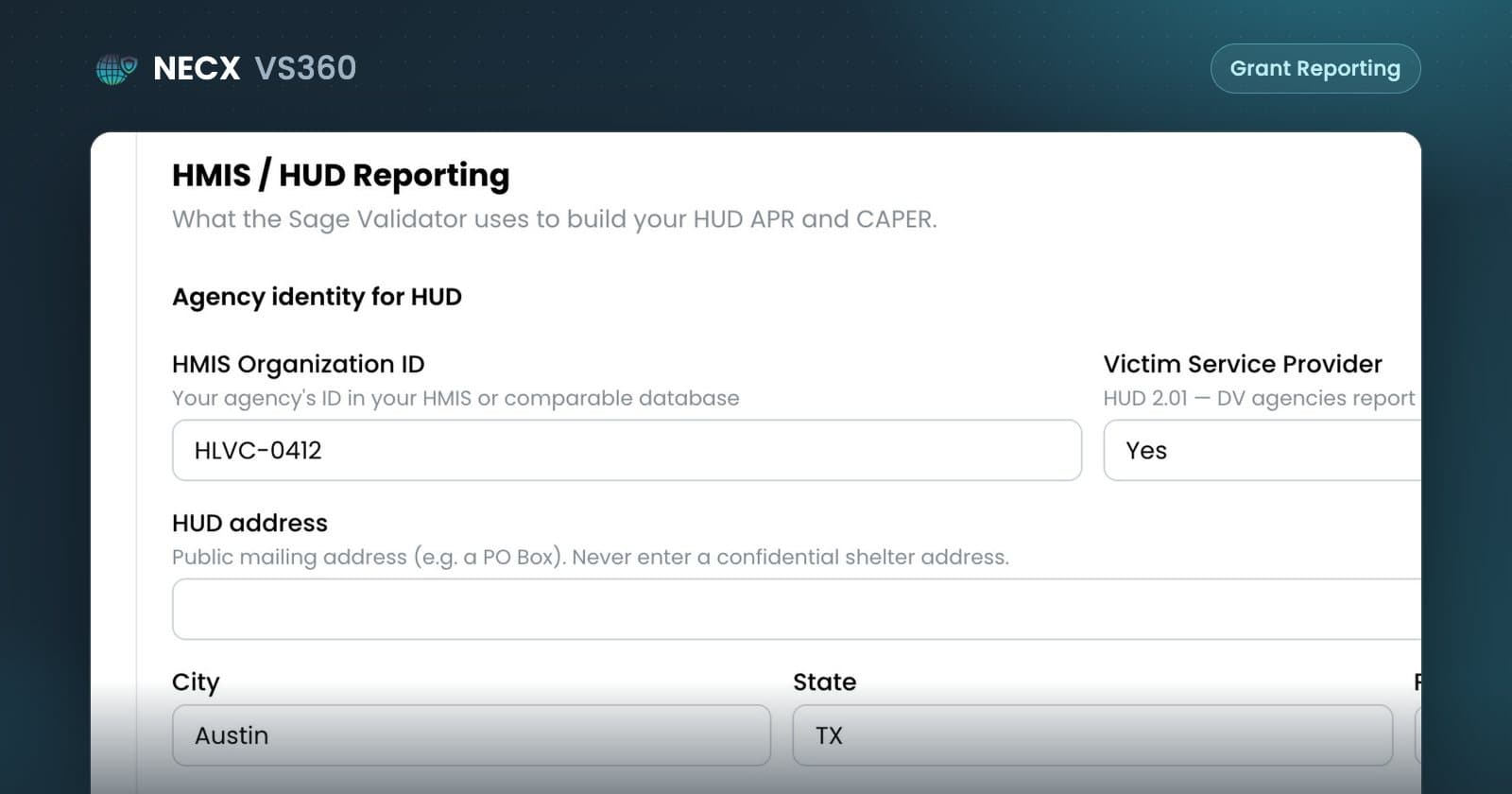
A plain-language guide to HMIS: who has to use it, what data goes in, which HUD reports come out, and why domestic violence programs use a comparable database instead.
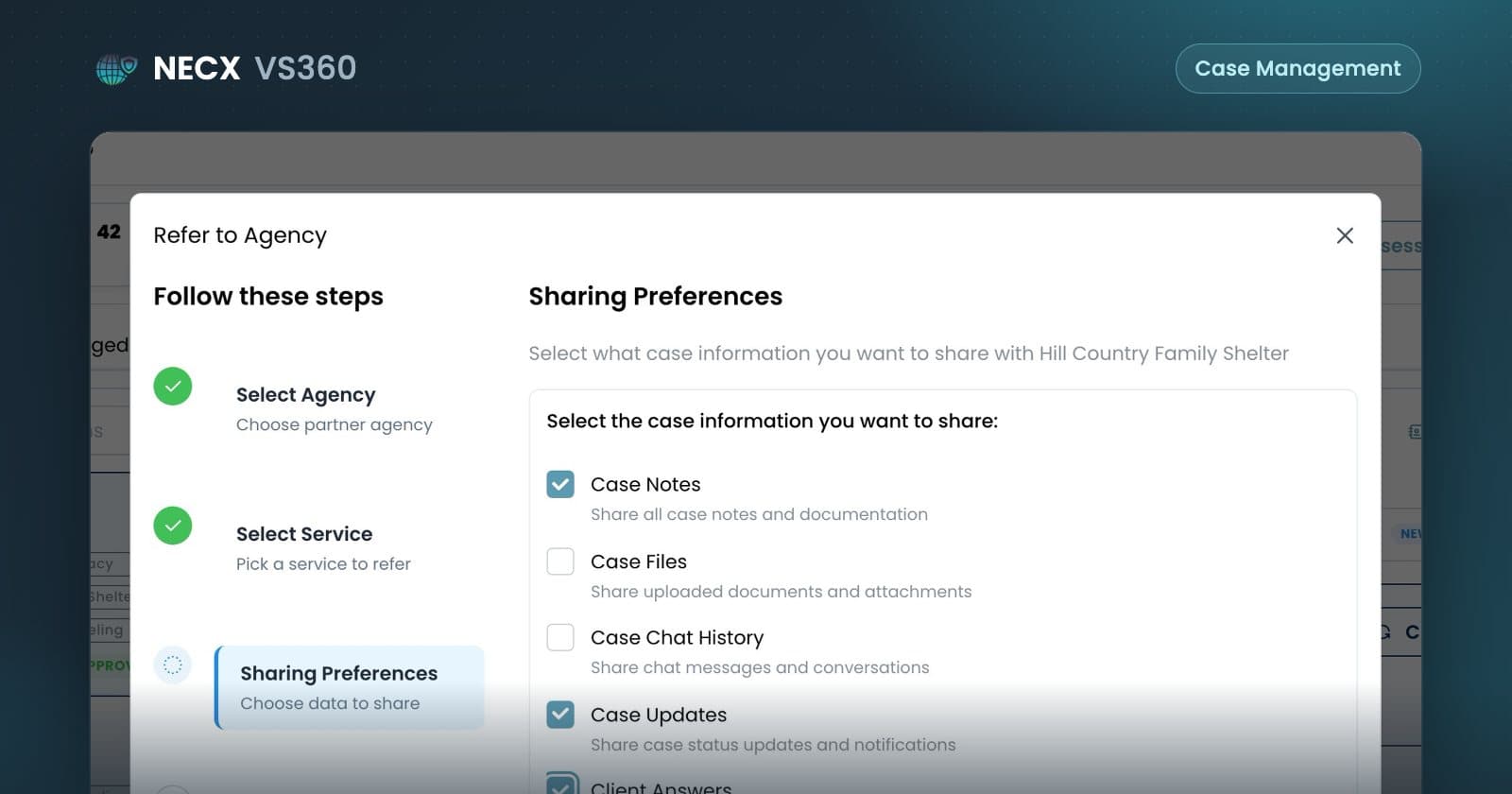
How coordinated community response partners can refer survivors to each other with informed, specific consent — so clients don't repeat their story and agencies stay within VAWA and VOCA confidentiality rules.
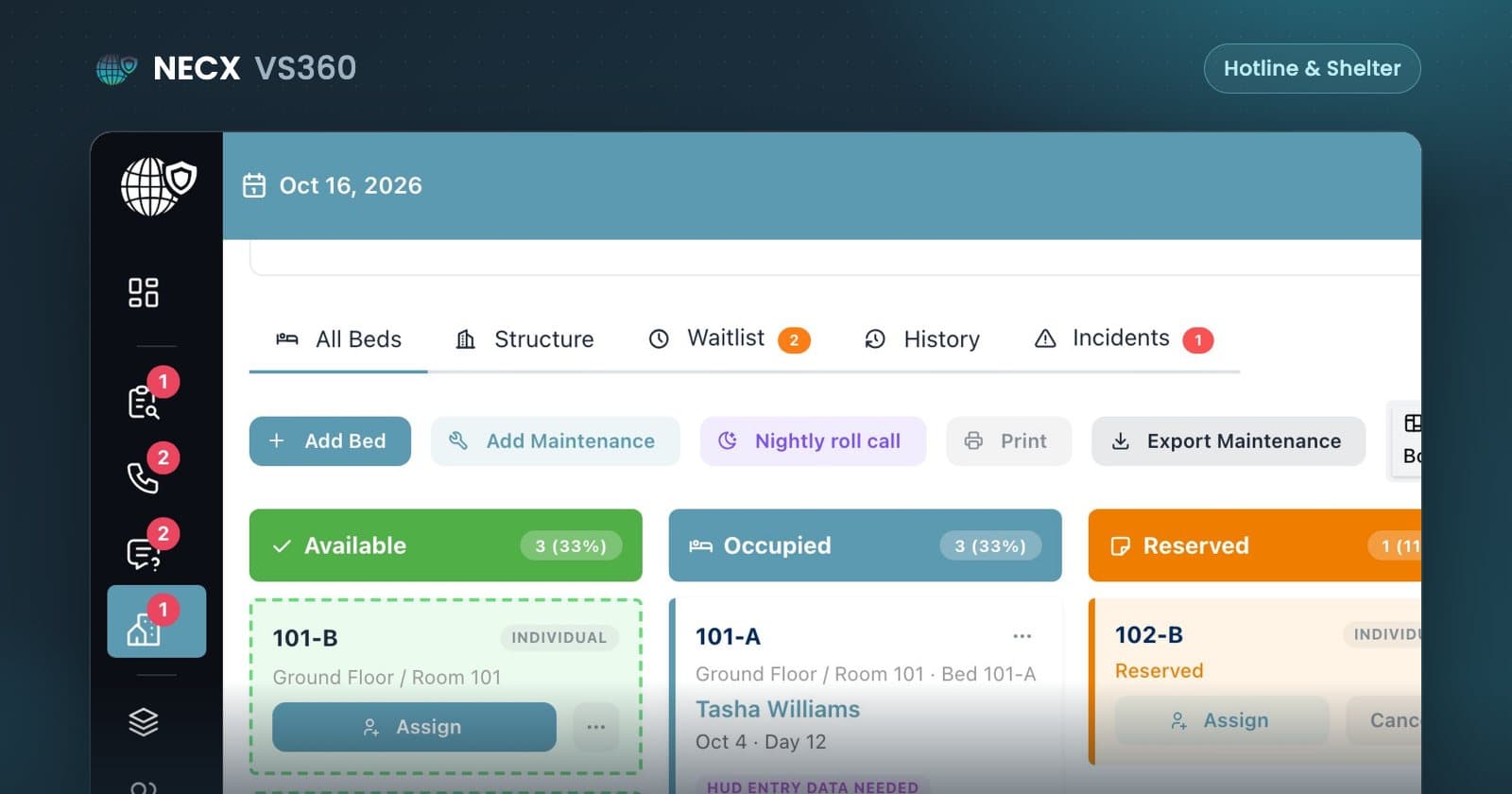
How domestic violence and emergency shelters move from whiteboards and spreadsheets to a live bed board — with family check-in, waitlists, transfers and the HUD stay data funders require.
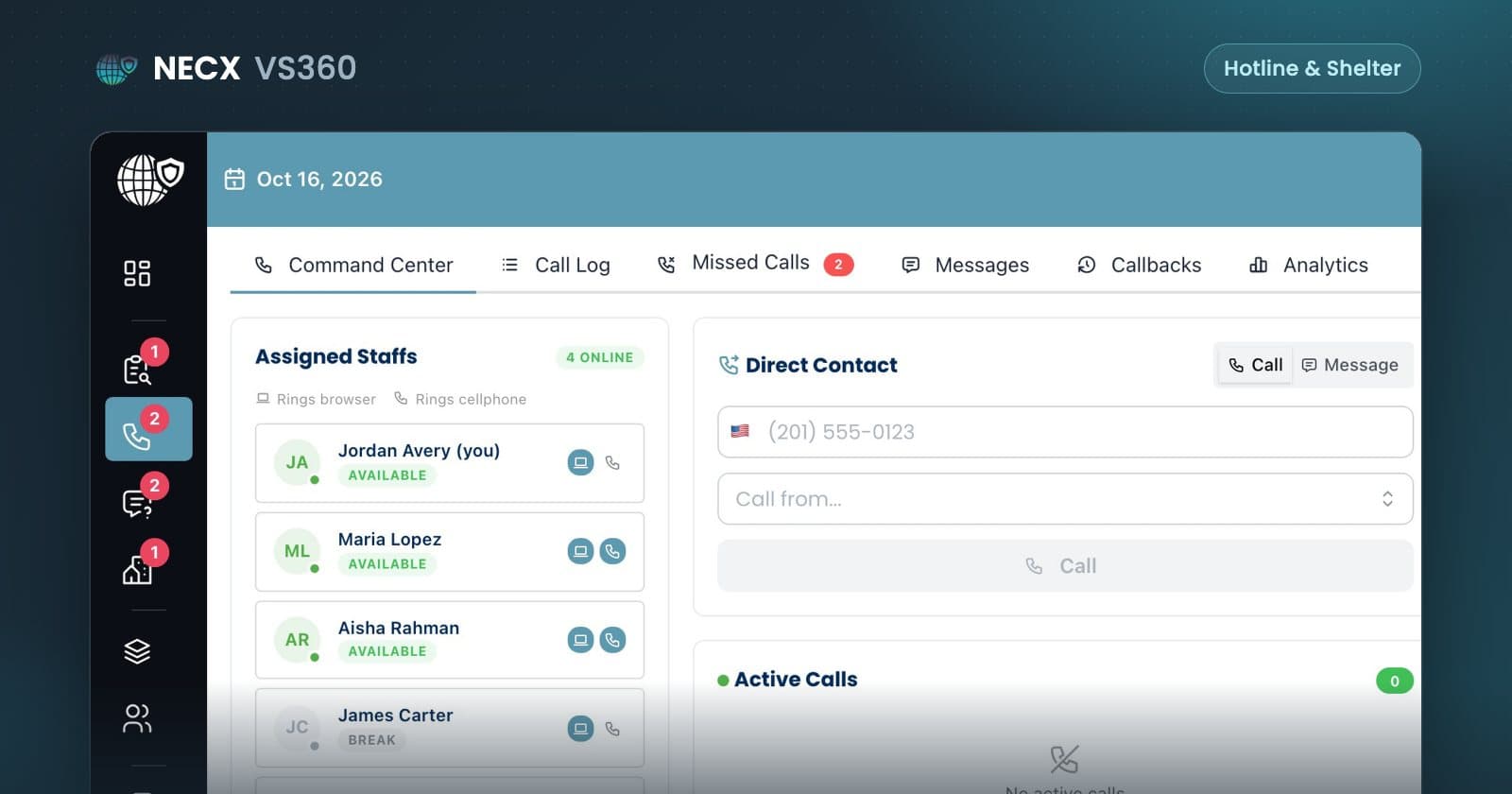
From ringing advocates in the browser to never losing a callback, here is what domestic violence and sexual assault hotlines should expect from crisis hotline software in 2026.
A practical checklist for executive directors and program managers evaluating case management software for DV/SA programs, victim-witness offices, shelters and hotlines — from confidentiality to funder reports to pricing.
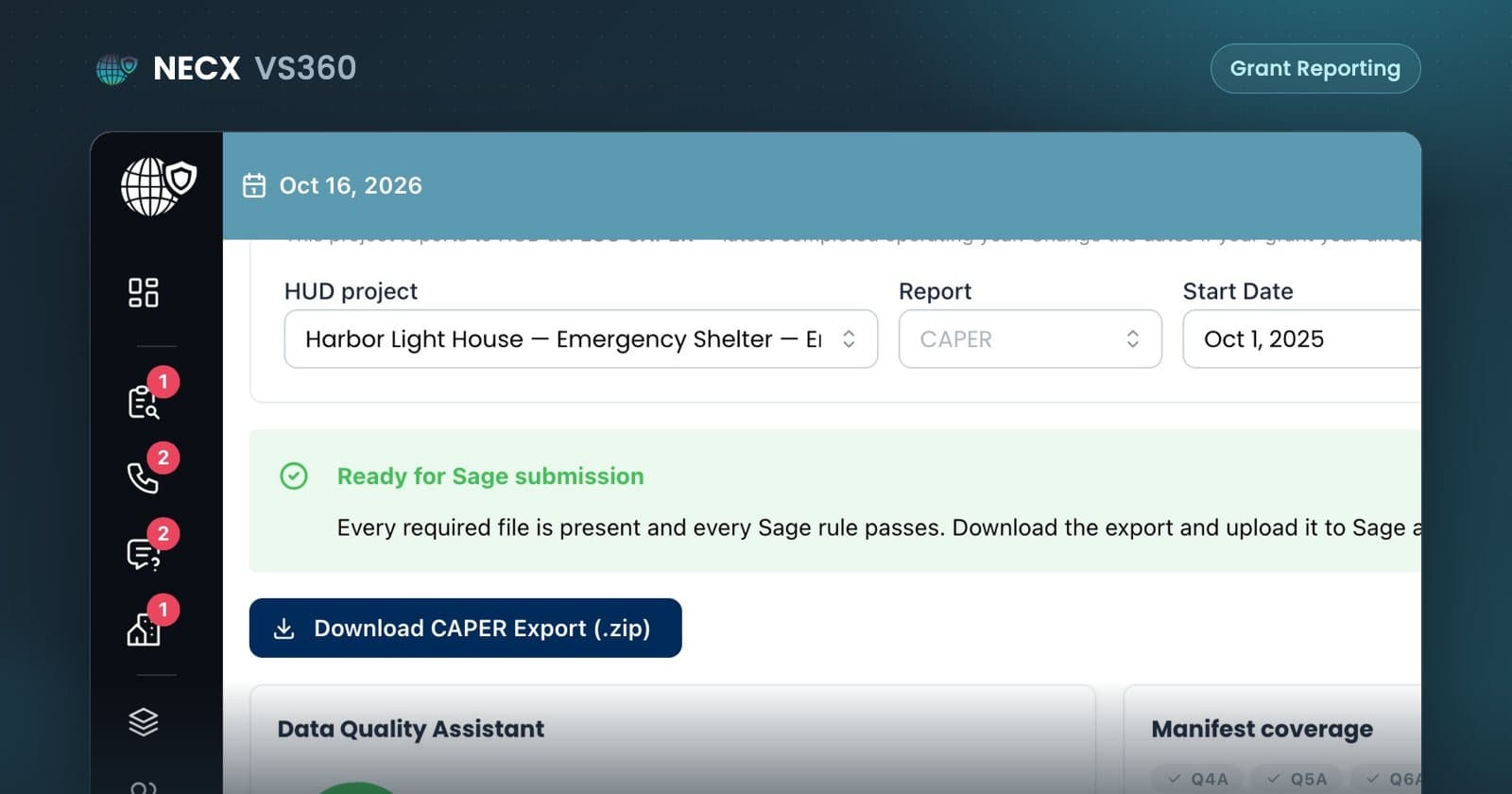
Why domestic violence and sexual assault programs can't use HMIS, what a HUD comparable database must do, and how to produce a CoC APR or ESG CAPER that passes in Sage.
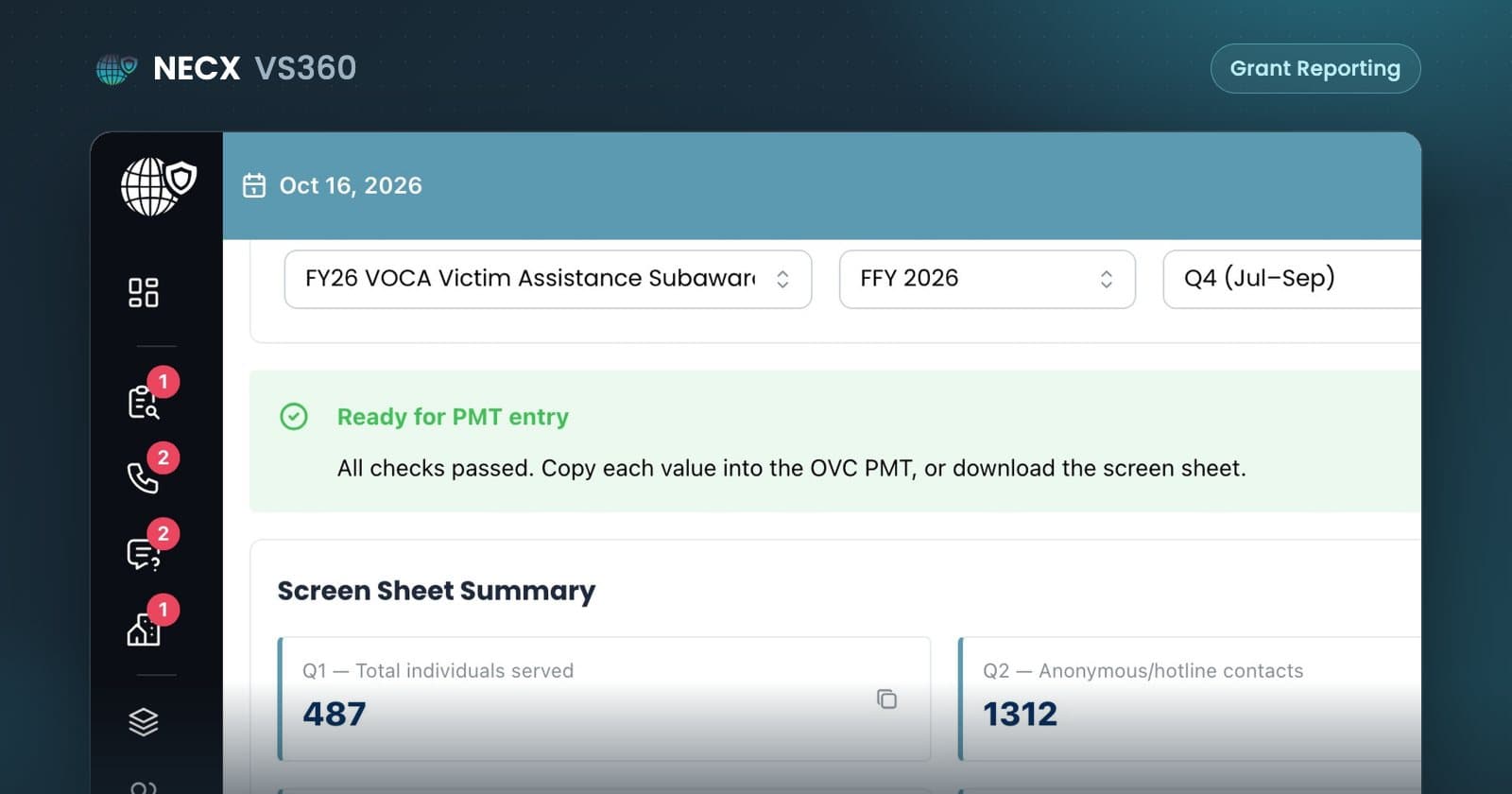
What VOCA subgrantees report in OVC's Performance Measurement Tool each quarter, the counting mistakes that trigger corrections, and a workflow that keeps the numbers ready before the deadline.