
Crisis Hotline Software: What a Modern 24/7 Hotline Platform Should Do
From ringing advocates in the browser to never losing a callback, here is what domestic violence and sexual assault hotlines should expect from crisis hotline software in 2026.
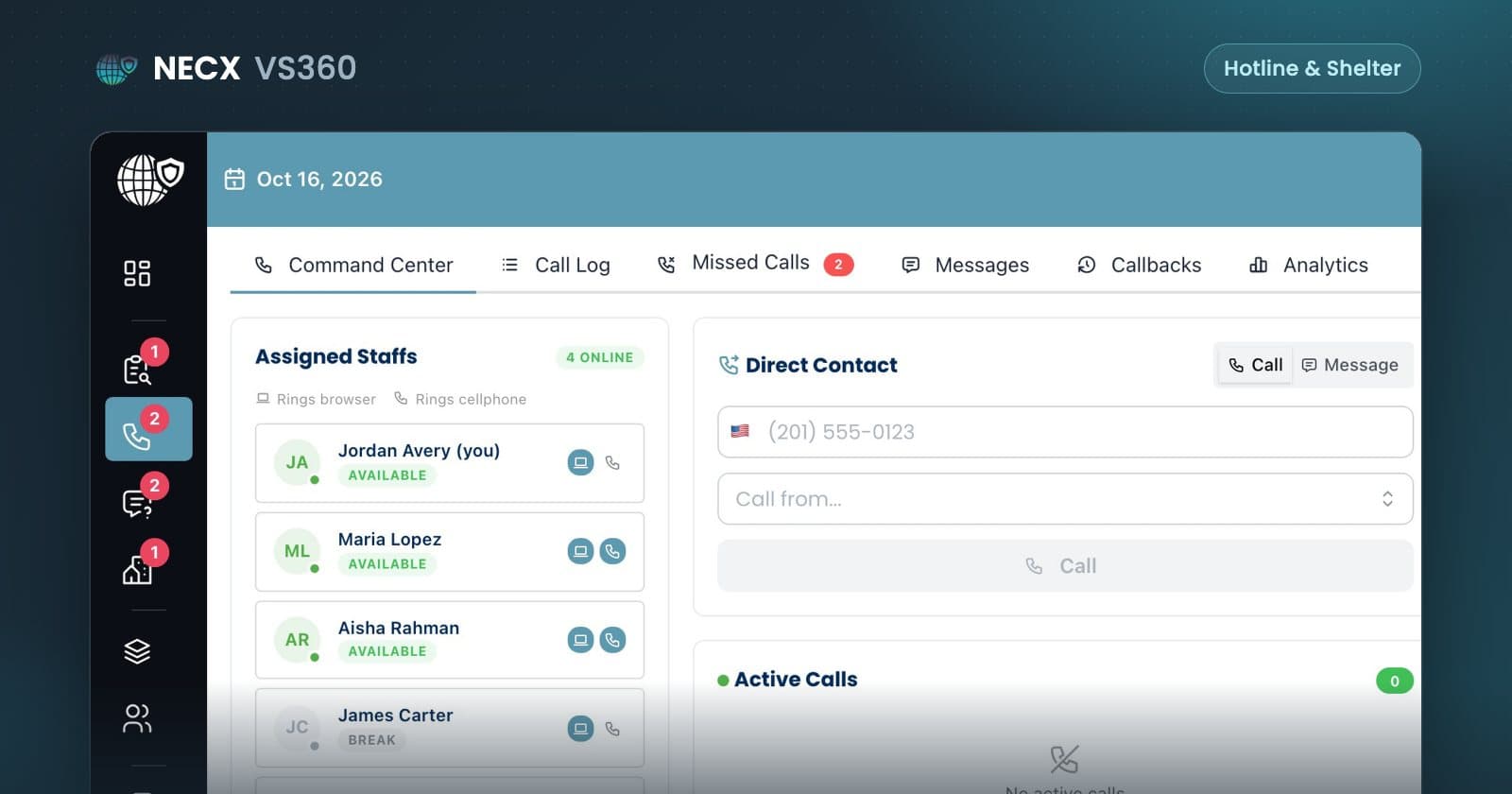
Key takeaways
- Modern crisis hotline software lets advocates answer calls in a web browser or on their own cell phone, without exposing personal numbers to callers.
- The biggest gap in most hotlines is the handoff from call to case: documentation should flow into the client record instead of a separate call log.
- Callbacks need an owner and a due time; overdue and missed calls should be impossible to overlook.
- AI can draft call wrap-ups and summaries, but staff must review and approve them, and hotline data access should be limited by role.
On this page
Crisis hotline software is the system a victim service agency uses to answer, route, document and follow up on 24/7 crisis calls and texts. For domestic violence and sexual assault programs, it should also link every call to the client's case record and produce the hotline data funders request.
A crisis line is often the first contact a survivor has with your agency. Crisis hotline software should make that moment easier for the advocate who answers. It should also make sure nothing said on the call gets lost before it reaches a case manager.
Here is what a modern platform should do, and what to ask before you choose one.
Answer anywhere, without exposing personal numbers
Overnight and weekend coverage is where hotlines struggle most. Modern platforms:
- Ring advocates in the browser while they're signed in, or forward to their cell phone when they're off-site.
- Show availability on a staff board so a supervisor can see who is on and who is on a call.
- Queue calls when everyone is busy, instead of sending them to voicemail.
- Mask personal numbers, so callers only ever see the hotline number.
Ask: "What happens when two advocates have the hotline open in two browser tabs?"
Connect the call to the case
In many agencies the hotline log is a separate spreadsheet or binder. When a caller later comes in for shelter or court advocacy, nobody can see the earlier call. A good platform:
- Lets the advocate create a case from the call, or link the call to an existing client.
- Puts the wrap-up (call reason, disposition, services and referrals) on the client record.
- Keeps a searchable call log with filters for date, line, advocate and outcome.
Never lose a callback
Missed calls and promised callbacks are a safety issue. Look for:
- Callbacks with an owner and a due time, shown on the calendar.
- Overdue callbacks flagged prominently.
- A missed-call list that someone owns every shift.
- Two-way SMS for survivors who can't safely talk.
Use AI to reduce paperwork, not judgment
After a hard call, the last thing an advocate needs is a long form. Platforms now offer:
- Live transcripts and insights, such as safety concerns, surfaced during the call.
- AI-drafted wrap-ups with suggested dispositions, which staff then review and edit.
Guardrails matter more than features here. Transcripts should be visible only to roles that need them, hotline access should be private by design, and nothing should become part of the record without staff approval.
Measure what funders and boards ask about
Hotline analytics should show call volume by hour and day, answer rates, average handle time, top call reasons and callback completion. Use these numbers for staffing decisions and grant narratives.
How NECX VS360 Hotline works
VS360 Hotline is a browser-based 24/7 crisis call center built into the same platform as cases, shelter and reporting:
- Calls ring in the browser or on staff cellphones. A command center shows staff availability, the call queue and active calls.
- Live transcripts and NECX AI insights, plus an AI-drafted wrap-up with dispositions that staff confirm.
- One click creates a case from a call. Callbacks with overdue flags appear on the calendar, alongside the missed-call list, call log and analytics.
- Two-way SMS, and hotline permissions by role.
Running a shelter too? Read how a live bed board replaces the shelter spreadsheet. Choosing a whole platform? Start with our case management software checklist.
Further reading
- Office for Victims of Crime: training and resources for victim service hotlines.
Frequently asked questions
What is crisis hotline software?
It is a system for answering, routing, documenting and following up on crisis calls and texts. For victim service agencies it should also connect calls to case records and produce the hotline data funders request.
Can advocates answer the hotline from home?
Yes. Browser-based hotline platforms ring staff in a web browser or forward to their cell phone, while the caller sees only the hotline number. This makes remote and overnight coverage practical.
Is it safe to use AI on crisis calls?
Used carefully, it reduces paperwork. Transcripts and AI-drafted wrap-ups should be visible only to authorized roles, never shared outside the agency, and always reviewed by staff before they become part of the record.
What hotline data do funders ask for?
Common examples are call volume, call topics or reasons, services provided and referrals made. Some state programs also want hotline-specific categories, so make sure dispositions can be configured.
Written by
Victim services & grant compliance specialists
The NECX team builds VS360 alongside victim service agencies, DV/SA programs, shelters and hotlines. We write about the reporting, confidentiality and operational problems we help agencies solve every week.
Keep reading
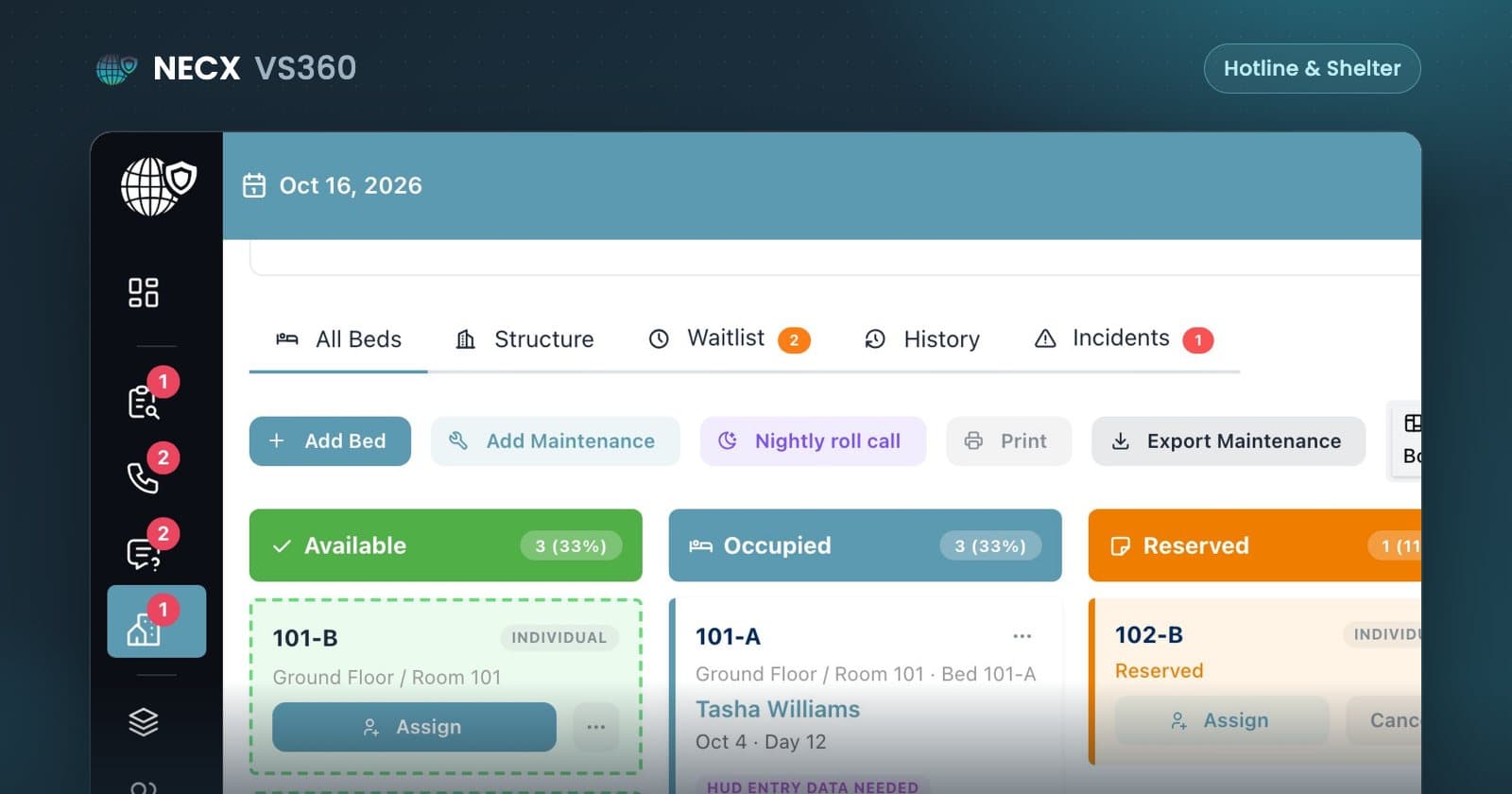
Shelter Bed Management Software: Replacing the Bed-Board Spreadsheet
How domestic violence and emergency shelters move from whiteboards and spreadsheets to a live bed board — with family check-in, waitlists, transfers and the HUD stay data funders require.
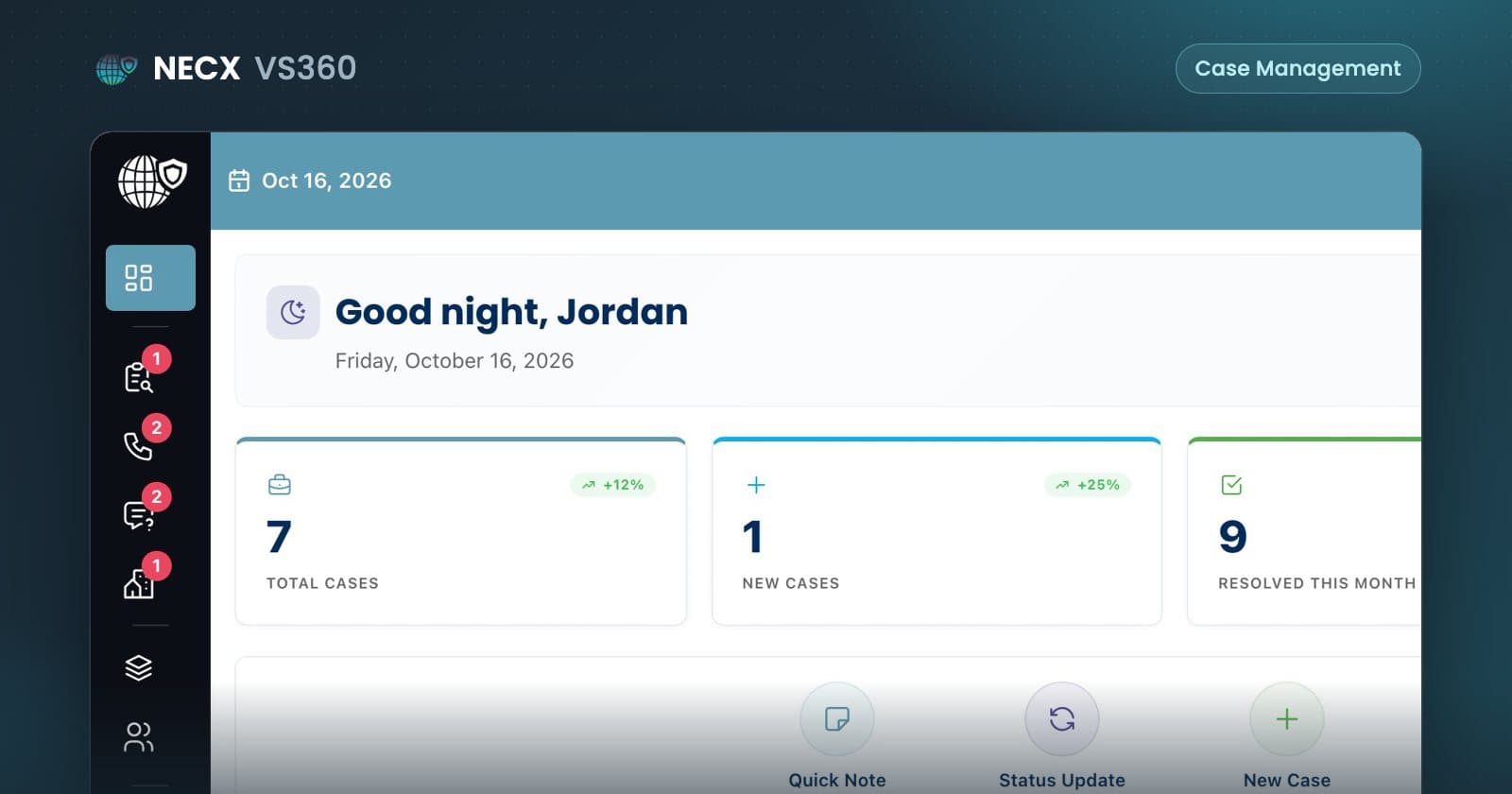
How to Choose Case Management Software for Victim Services: A 2026 Buyer’s Checklist
A practical checklist for executive directors and program managers evaluating case management software for DV/SA programs, victim-witness offices, shelters and hotlines — from confidentiality to funder reports to pricing.
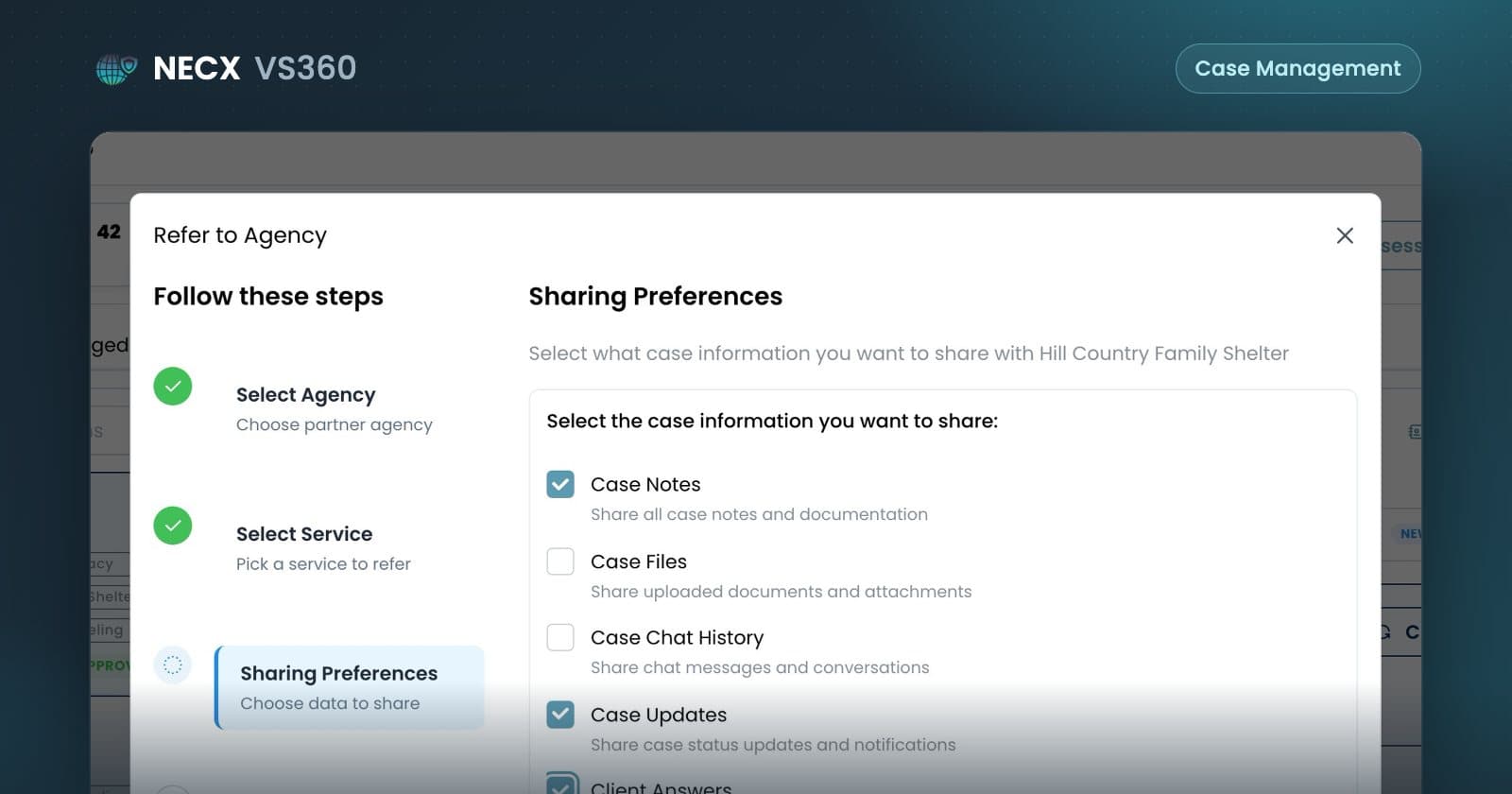
Consent-Based Referrals: Sharing Survivor Information Between Agencies Without Starting Over
How coordinated community response partners can refer survivors to each other with informed, specific consent — so clients don't repeat their story and agencies stay within VAWA and VOCA confidentiality rules.