
Consent-Based Referrals: Sharing Survivor Information Between Agencies Without Starting Over
How coordinated community response partners can refer survivors to each other with informed, specific consent — so clients don't repeat their story and agencies stay within VAWA and VOCA confidentiality rules.
Key takeaways
- Under VAWA and VOCA confidentiality rules, survivor information can only be shared with a partner agency with the survivor's informed, written, reasonably time-limited consent.
- Good consent is specific: it names the receiving agency, the exact information to be shared and how long the release lasts.
- When consent travels with the referral field by field, the receiving agency starts with what the survivor agreed to share — and nothing more.
- Survivors should be able to see, grant and withdraw consent themselves.
On this page
A consent-based referral sends a survivor's information to a partner agency only with that survivor's informed, written, time-limited consent, specific to the recipient and the information shared. VAWA and VOCA confidentiality provisions require it for most victim service grantees.
Survivors often need help from several organizations: a shelter, legal aid, a prosecutor's victim-witness office, housing and counseling. Every handoff is a chance for them to tell their story again, or to have it shared more widely than they agreed. Consent-based referrals solve both problems.
This article is general information, not legal advice. Confirm your obligations with your funders and counsel.
The rule: informed, written, time-limited consent
VAWA and VOCA grantees must protect the confidentiality of survivors' personally identifying information. Agencies may not share it with another organization unless one of these applies:
- the survivor gives informed, written, reasonably time-limited consent, or
- a statute or court order compels the release.
In practice, a compliant release is specific. It names:
- Who receives the information (the specific partner agency).
- What is shared (for example, name and phone, but not address or case notes).
- Why (the purpose of the referral).
- How long the consent lasts.
- The survivor's right to revoke it at any time.
A blanket "we may share your information with partners" form does not meet this standard.
Why paper and email referrals fail survivors
When referrals travel by phone, fax or email:
- The receiving agency gets too little, so the survivor starts over, or too much, beyond what the survivor agreed to.
- Nobody can tell later what was shared and when.
- The survivor can't easily see or withdraw consent.
What good referral workflows look like
Start with a partner network. Agencies connect to each other first. Each partner lists its services and whether it is accepting referrals.
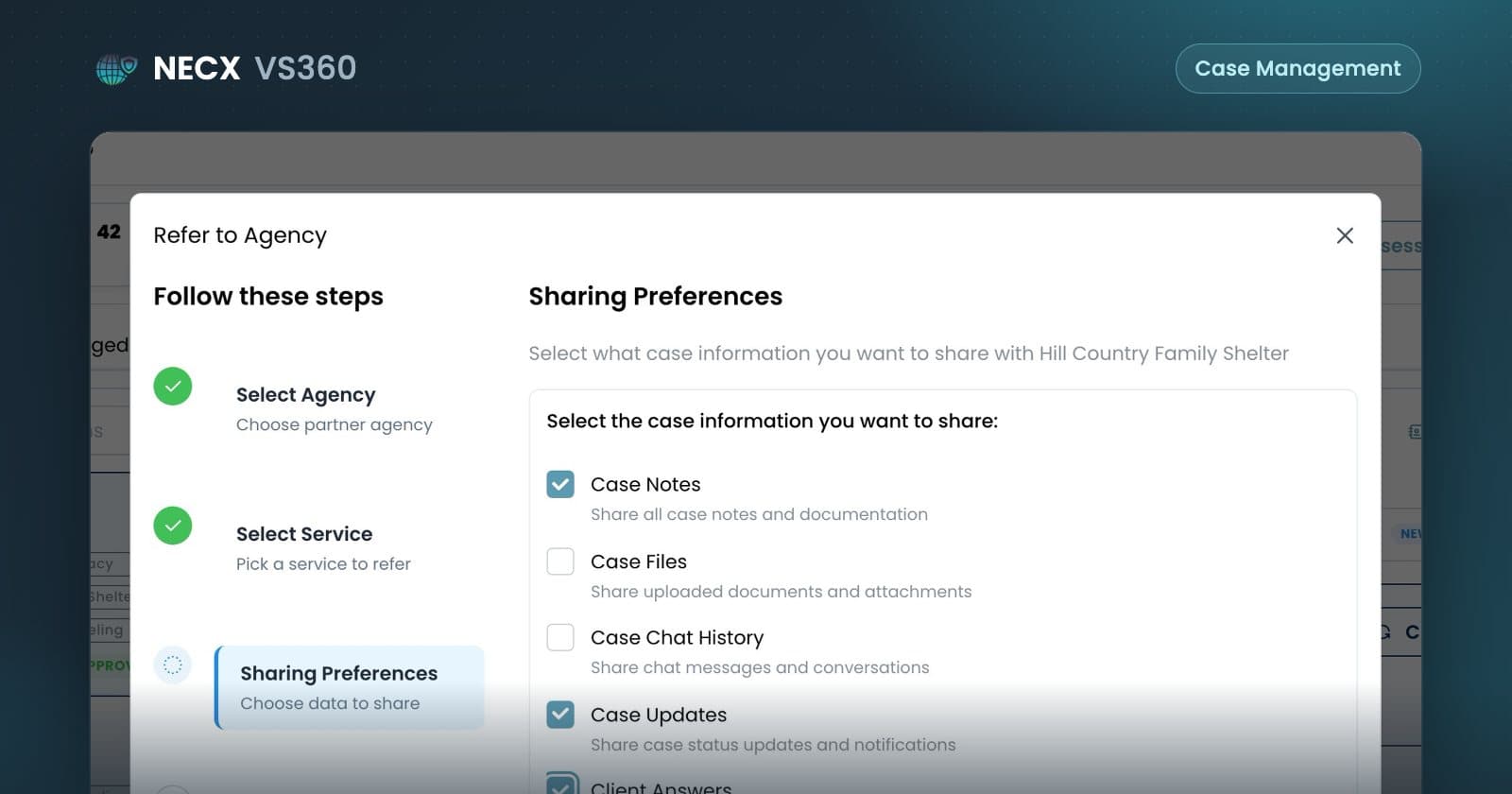
Make consent field by field. When an advocate refers a client, they choose exactly which fields go to the partner. The survivor consents to that specific package.
Let the survivor decide. With a client app, the survivor sees the request and approves or declines it. Their decision is recorded either way.
Keep an audit trail. Record who referred whom, which fields were shared, when consent was granted or withdrawn, and the referral's status.
How NECX VS360 handles referrals
- My Network: a directory of partner agencies, with their services and an "accepting referrals" status. Agencies request to connect and accept or decline. You can invite partners by email.
- Refer to Agency on any case. Consent travels field by field, so the receiving agency starts with what the client agreed to share, and the client doesn't start over.
- The client consents in the NECX app. If consent is denied, the receiving agency gets nothing identifying.
- Agency-to-agency chat for coordination, and an audit trail on every action.
Building a coordinated community response across a region or coalition? See the glossary entry for CCR, our case management software checklist, or book a demo to see a referral end to end with fictional data.
Further reading
- Office on Violence Against Women: VAWA confidentiality guidance and grantee resources.
- Office for Victims of Crime: VOCA confidentiality requirements.
Frequently asked questions
Can we share survivor information with a partner agency?
Only with the survivor's informed, written, reasonably time-limited consent, specific to the information and recipient, or where a statute or court order requires it. Confirm your exact obligations with your funder and legal counsel.
What should a release of information include?
The receiving agency, the specific information to be shared, the purpose, the time limit, and the survivor's right to revoke it. Blanket or open-ended releases are not compliant.
What is a coordinated community response (CCR)?
A model in which advocates, law enforcement, prosecutors, courts, health and housing partners coordinate their response to domestic and sexual violence so survivors receive consistent support.
What happens if a survivor declines consent?
The referral can still be made as general information (for example, giving the survivor the partner's contact details), but no identifying information is sent. The survivor's choice should be recorded.
Written by
Victim services & grant compliance specialists
The NECX team builds VS360 alongside victim service agencies, DV/SA programs, shelters and hotlines. We write about the reporting, confidentiality and operational problems we help agencies solve every week.
Keep reading
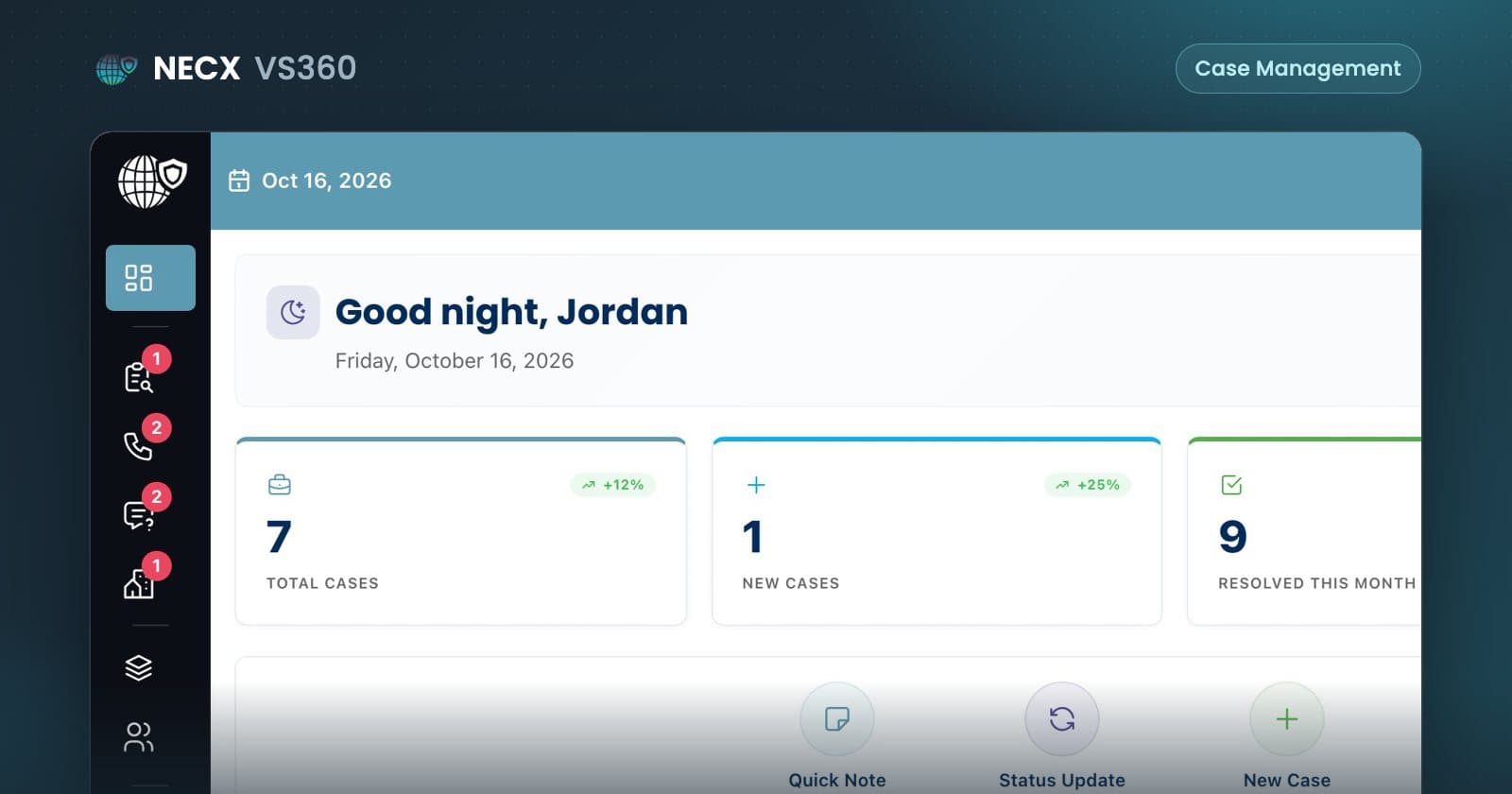
How to Choose Case Management Software for Victim Services: A 2026 Buyer’s Checklist
A practical checklist for executive directors and program managers evaluating case management software for DV/SA programs, victim-witness offices, shelters and hotlines — from confidentiality to funder reports to pricing.
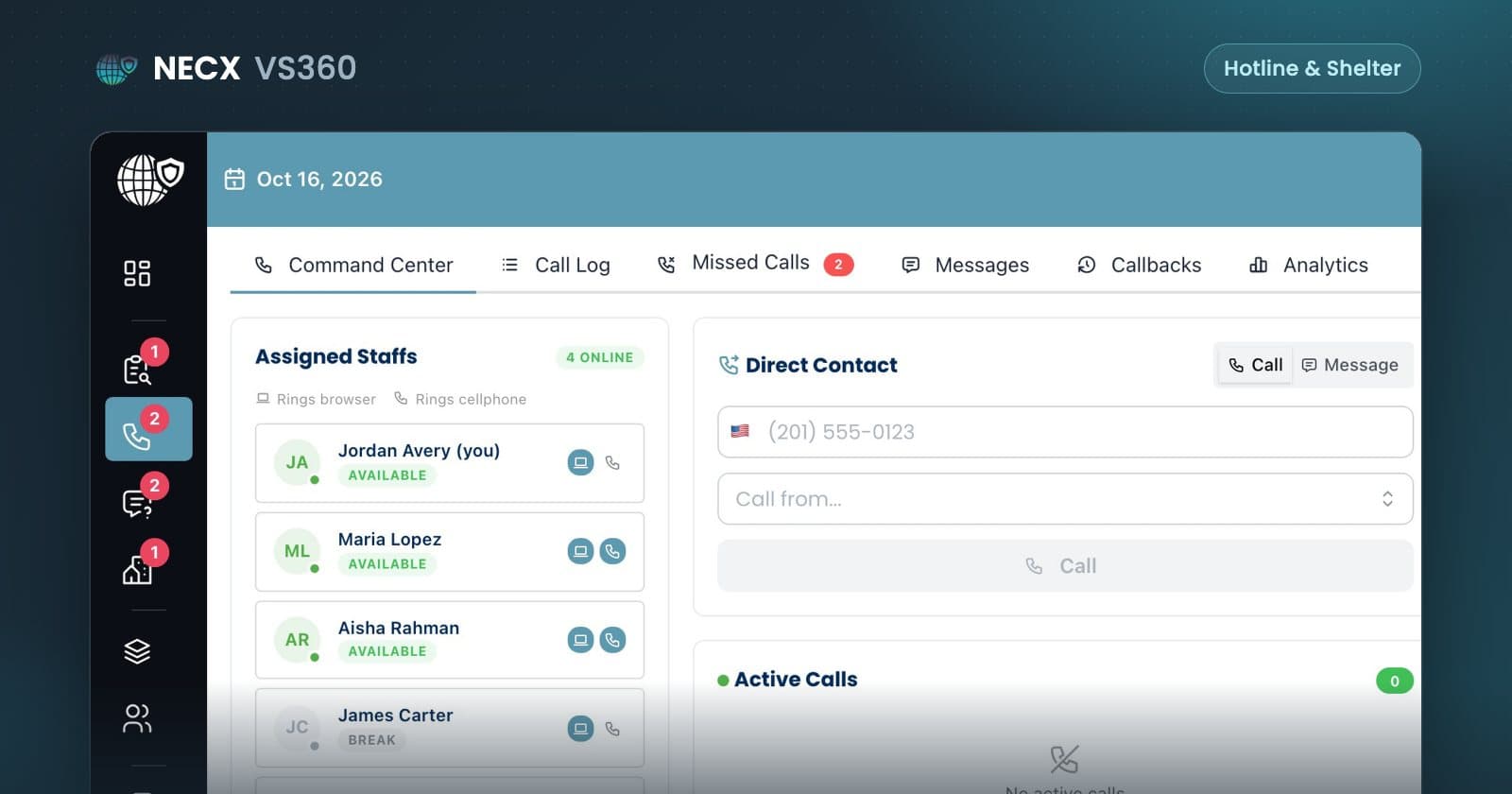
Crisis Hotline Software: What a Modern 24/7 Hotline Platform Should Do
From ringing advocates in the browser to never losing a callback, here is what domestic violence and sexual assault hotlines should expect from crisis hotline software in 2026.
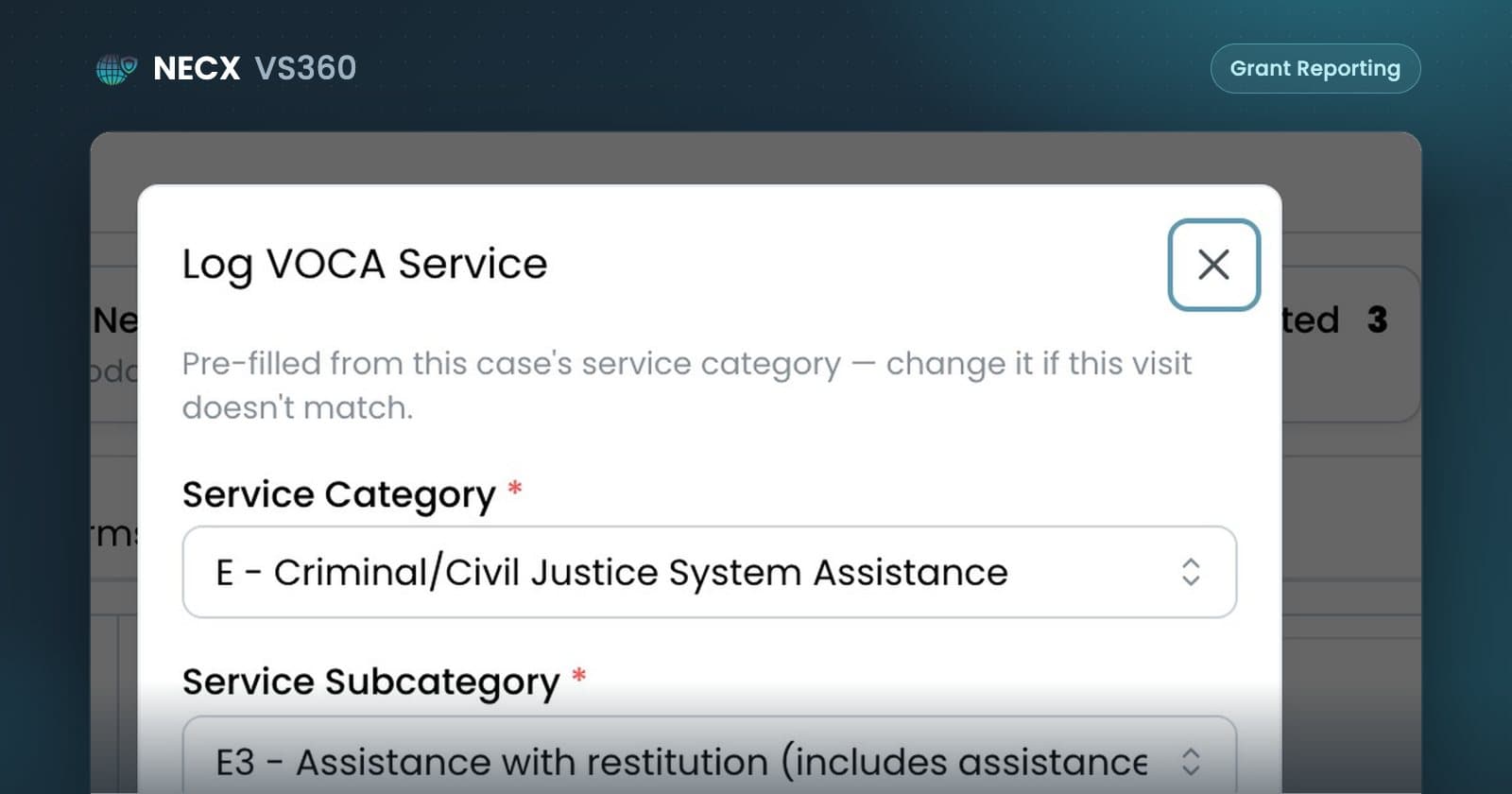
VOCA Grants Explained: How Victim Assistance Funding Works and What It Requires
Where VOCA money comes from, how it reaches local programs, what it pays for, and the reporting and confidentiality rules every VOCA subrecipient has to meet.