
How to Choose Case Management Software for Victim Services: A 2026 Buyer’s Checklist
A practical checklist for executive directors and program managers evaluating case management software for DV/SA programs, victim-witness offices, shelters and hotlines — from confidentiality to funder reports to pricing.
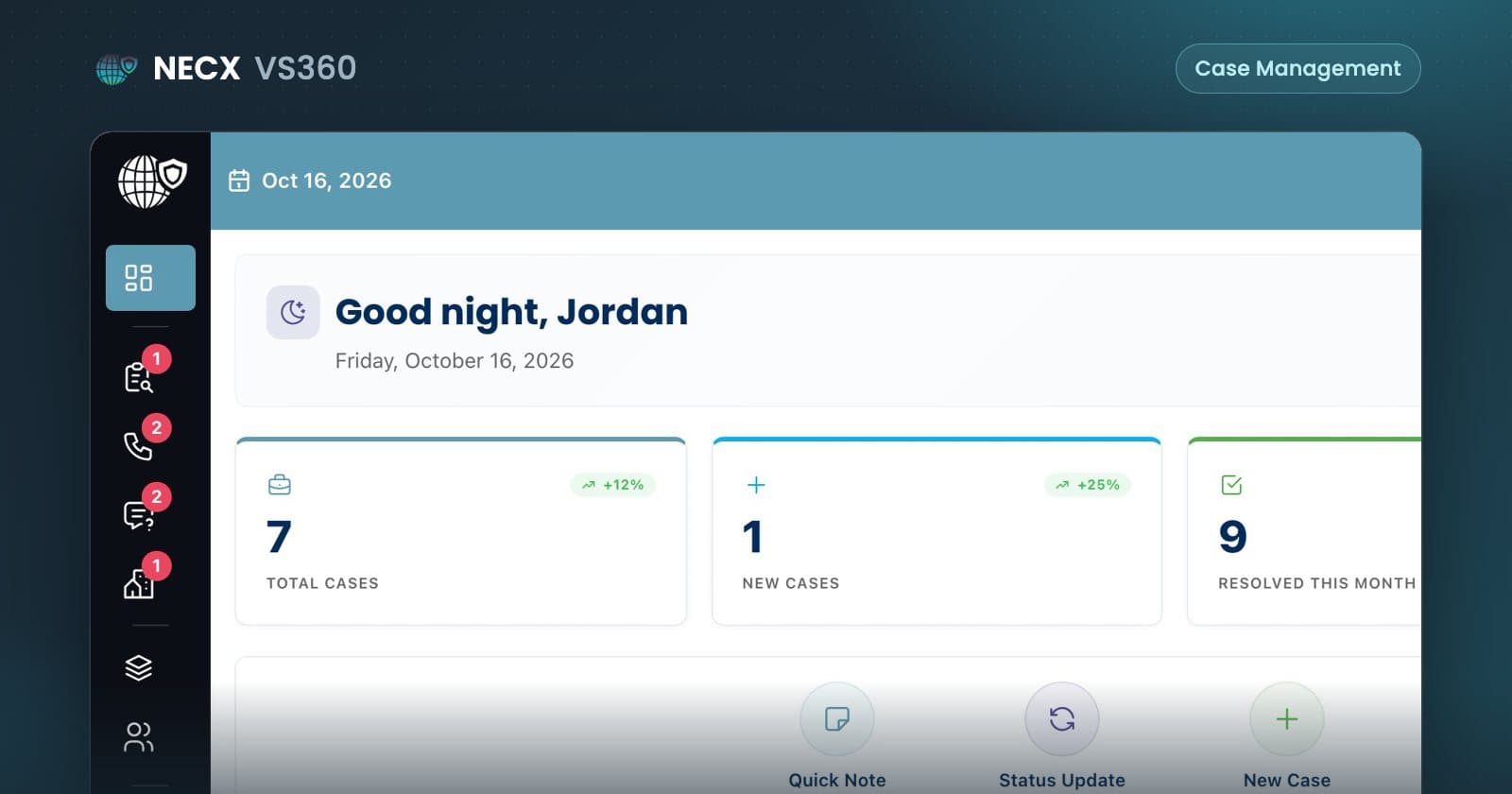
Key takeaways
- Victim services case management software must protect confidentiality by design: role-based access, an audit trail on every action, and no unnecessary identifying data.
- The biggest time saver is reporting: look for funder reports (VOCA PMT, HUD APR/CAPER, state reports) generated from everyday case work, with validation before submission.
- Per-seat pricing penalizes agencies that rely on volunteers and part-time staff; an organization license with unlimited users is easier to budget under a grant.
- Ask every vendor how long go-live takes, who owns the data, and exactly how you get it back if you leave.
On this page
- 1. Confidentiality and security are architecture, not settings
- 2. One record per person, across every service
- 3. Funder reports from everyday work
- 4. Hotline, shelter and referrals, if you run them
- 5. Pricing that fits a grant budget
- 6. Go-live time and support
- 7. Data ownership and exit
- 8. Mobile access for staff and survivors
- How NECX VS360 measures up
Choosing victim services case management software is one of the few technology decisions that touches every survivor, every advocate and every grant at once. Get it right and reporting stops being a quarterly fire drill. Get it wrong and your team works around the system for years.
Use this checklist to compare vendors side by side. It works whether you're evaluating dedicated domestic violence software, family services software or broader case management systems for social services. Each section ends with questions to ask in the demo.
1. Confidentiality and security are architecture, not settings
Victim service agencies work under strict confidentiality rules, including VAWA and VOCA provisions and state law. The software should make the safe path the default:
- Role-based access down to the module and action (view, add, edit, delete).
- An immutable audit trail of who viewed or changed what, and when.
- Internal notes walled off from anything a client or partner can see.
- Data minimization. Don't collect identifiers you don't need, such as Social Security numbers.
- Tenant isolation and encryption in transit.
Ask: "Show me the audit log for one client record." "Can a hotline volunteer see shelter locations?"
2. One record per person, across every service
Survivors rarely need just one thing. A single person might call the hotline, stay in shelter, get court accompaniment and need a referral, all in one year. If those live in separate tools, you double-count people in reports and make survivors repeat their story.
Ask: "If a hotline caller later enters shelter, is that the same client record?"
3. Funder reports from everyday work
This is where most time is lost. Strong platforms generate reports from data staff already enter, rather than asking someone to rebuild them every quarter:
- VOCA PMT quarterly data with validation. (See our VOCA PMT guide.)
- HUD CoC APR / ESG CAPER from a comparable database, checked against Sage.
- State reports, such as Texas HHSC, if they apply to you.
- Staff time by funding source for allocation and match.
Ask: "Generate last quarter's report live, from demo data, and show me the validation errors."
4. Hotline, shelter and referrals, if you run them
Modular platforms let you turn on only what you run:
- Hotline: calls answered in the browser, documentation linked to cases, and callbacks that don't get lost. See what modern crisis hotline software should do.
- Shelter: a live bed board, waitlist and check-in/out. See bed management software.
- Referrals: consent travels with the referral, so partners don't start from zero. See consent-based referrals.
5. Pricing that fits a grant budget
| Model | Works well when | Watch out for |
|---|---|---|
| Per user / month | Small, stable staff | Volunteers and part-timers multiply cost; adding a seat needs budget approval |
| Organization license | Grant-funded teams with volunteers | Confirm which modules are included |
| Setup + implementation fees | Complex migrations | One-time costs that may not be grant-allowable |
Ask: "What will we pay in year two with twice the volunteers?"
6. Go-live time and support
A long implementation is a long period of double entry. Ask for a dated plan and a named implementation contact.
7. Data ownership and exit
Your client records belong to your agency and the survivors you serve, not the vendor. Ask to see the export before you sign.
8. Mobile access for staff and survivors
Advocates work in courtrooms, hospitals and cars. Look for staff mobile apps with the same permissions as the web app. An optional, opt-in survivor app is also worth having. It lets clients message advocates, e-sign documents and follow updates without exposing internal notes.
How NECX VS360 measures up
We build NECX VS360, so we're not neutral. Here is how it maps to this checklist:
- Role-based permissions per module, an audit trail on every action, tenant isolation and encrypted transport. VS360 is CJIS-aligned, not CJIS-certified.
- One client record across cases, hotline, shelter, documents, e-signature, chat and referrals.
- VOCA PMT, HUD APR/CAPER with a Sage validator, and Texas HHSC DAL7. NECX AI drafts board and grant progress reports, and every figure is traced back to its source.
- An organization license with unlimited staff and no setup or per-user fees: Core from $9,600/yr, Complete from $14,400/yr.
- Most agencies are live in 48–72 hours. Your agency owns its data, and NECX helps you export it if you leave.
Hold us to the same questions: book a demo and ask them live.
Frequently asked questions
What is victim services case management software?
It is software that lets advocates and case managers record intake, services, notes, documents and outcomes for survivors in one confidential record, and produce the reports funders require.
How much does victim services case management software cost?
Pricing varies widely. Some vendors charge per user per month; others license per organization. For grant-funded agencies with volunteers, an organization license with unlimited users is usually more predictable. NECX VS360, for example, starts at $9,600 per year for an organization with unlimited staff.
Can grant funds pay for case management software?
Often, yes. Software that directly supports the funded program is frequently an allowable cost, but it depends on your award terms. Confirm with your grant manager or state administering agency.
How long should implementation take?
Weeks, not months, for most agencies. Ask vendors for a dated plan covering data migration, staff training and the first funder report.
Should survivors have access to the system?
An optional, opt-in client app can reduce phone tag. It lets survivors message their advocate, sign documents and follow case updates. It must never expose internal staff notes, and joining should be the survivor's choice.
Written by
Victim services & grant compliance specialists
The NECX team builds VS360 alongside victim service agencies, DV/SA programs, shelters and hotlines. We write about the reporting, confidentiality and operational problems we help agencies solve every week.
Keep reading
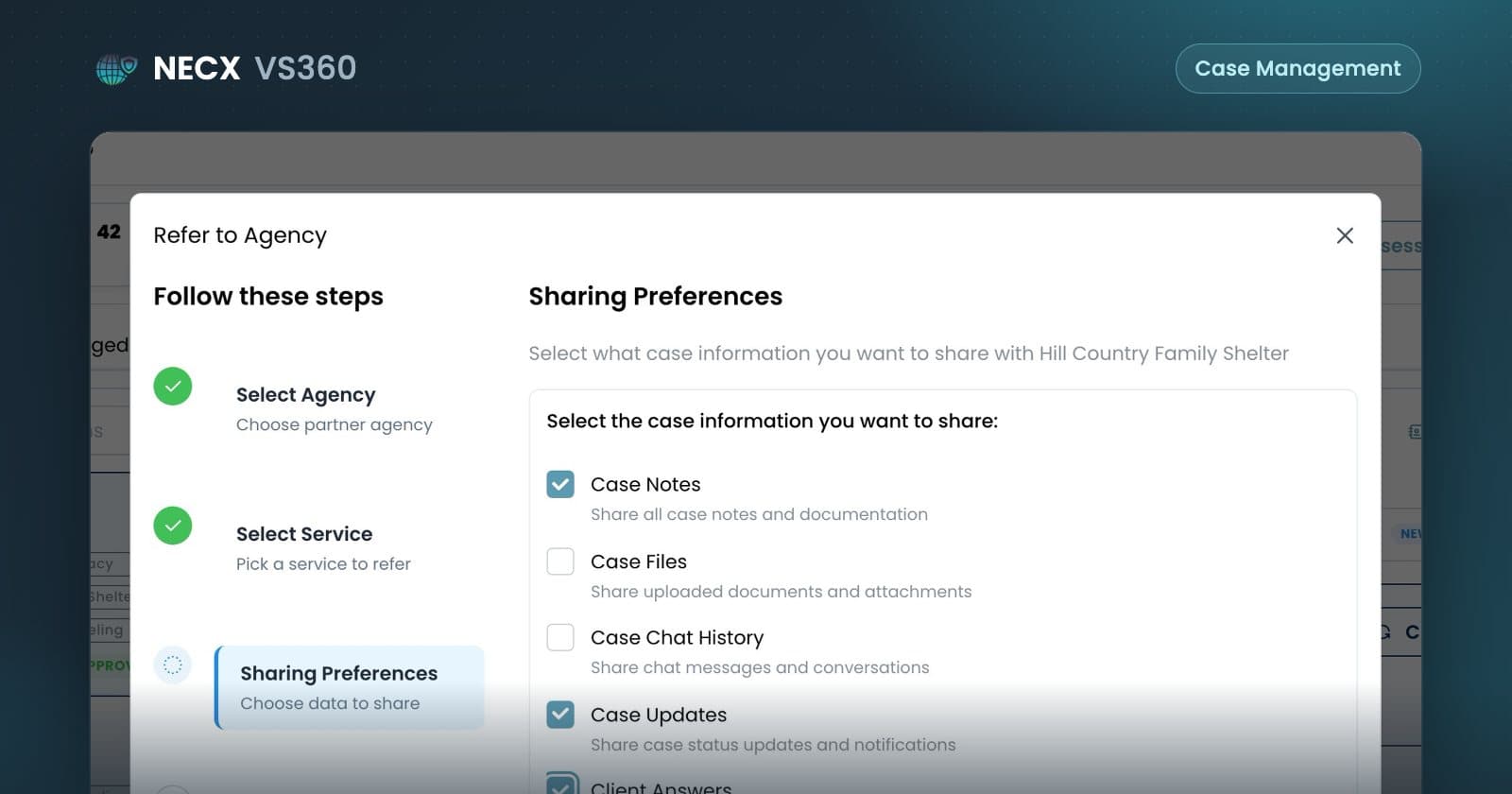
Consent-Based Referrals: Sharing Survivor Information Between Agencies Without Starting Over
How coordinated community response partners can refer survivors to each other with informed, specific consent — so clients don't repeat their story and agencies stay within VAWA and VOCA confidentiality rules.
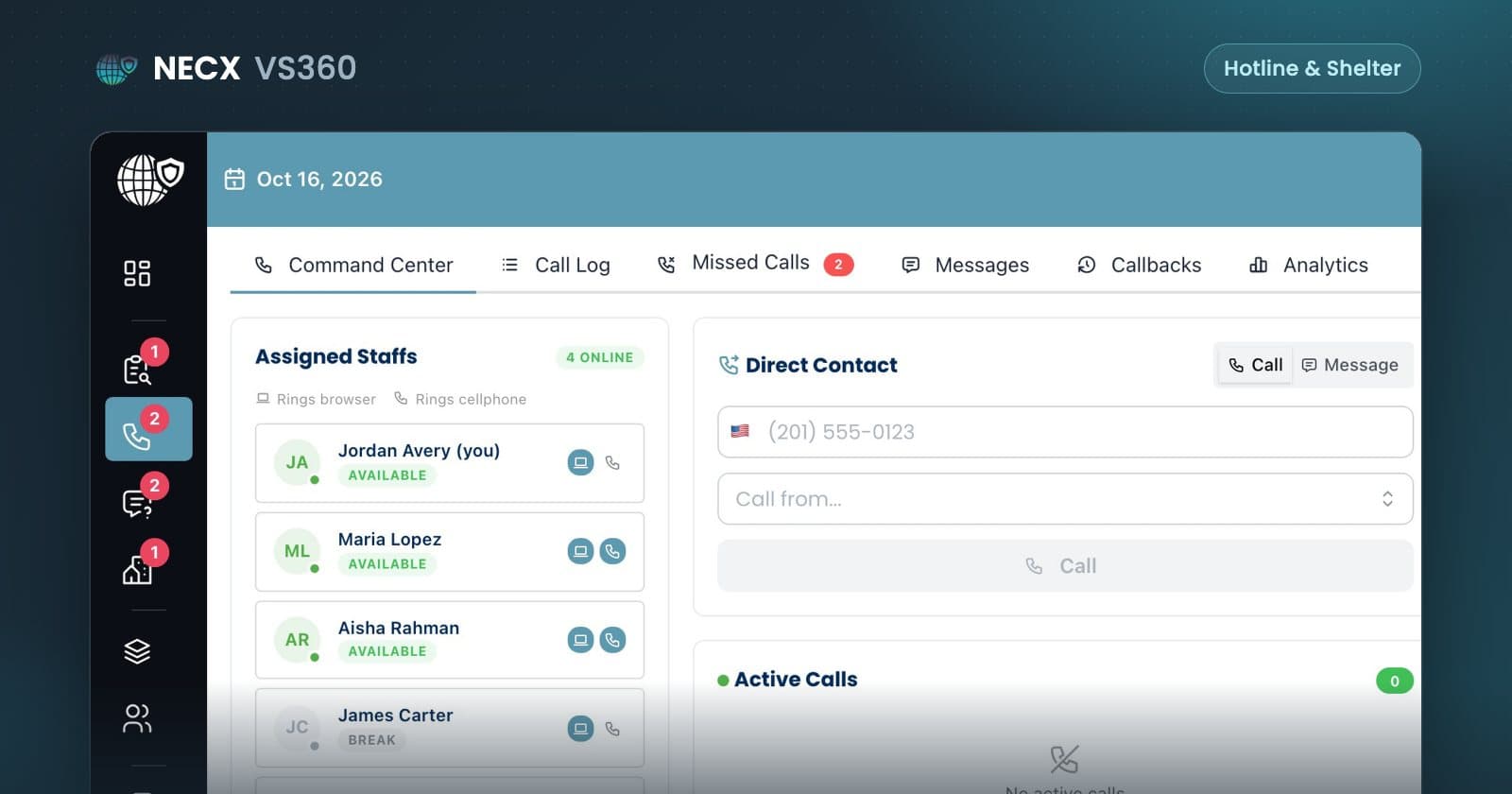
Crisis Hotline Software: What a Modern 24/7 Hotline Platform Should Do
From ringing advocates in the browser to never losing a callback, here is what domestic violence and sexual assault hotlines should expect from crisis hotline software in 2026.
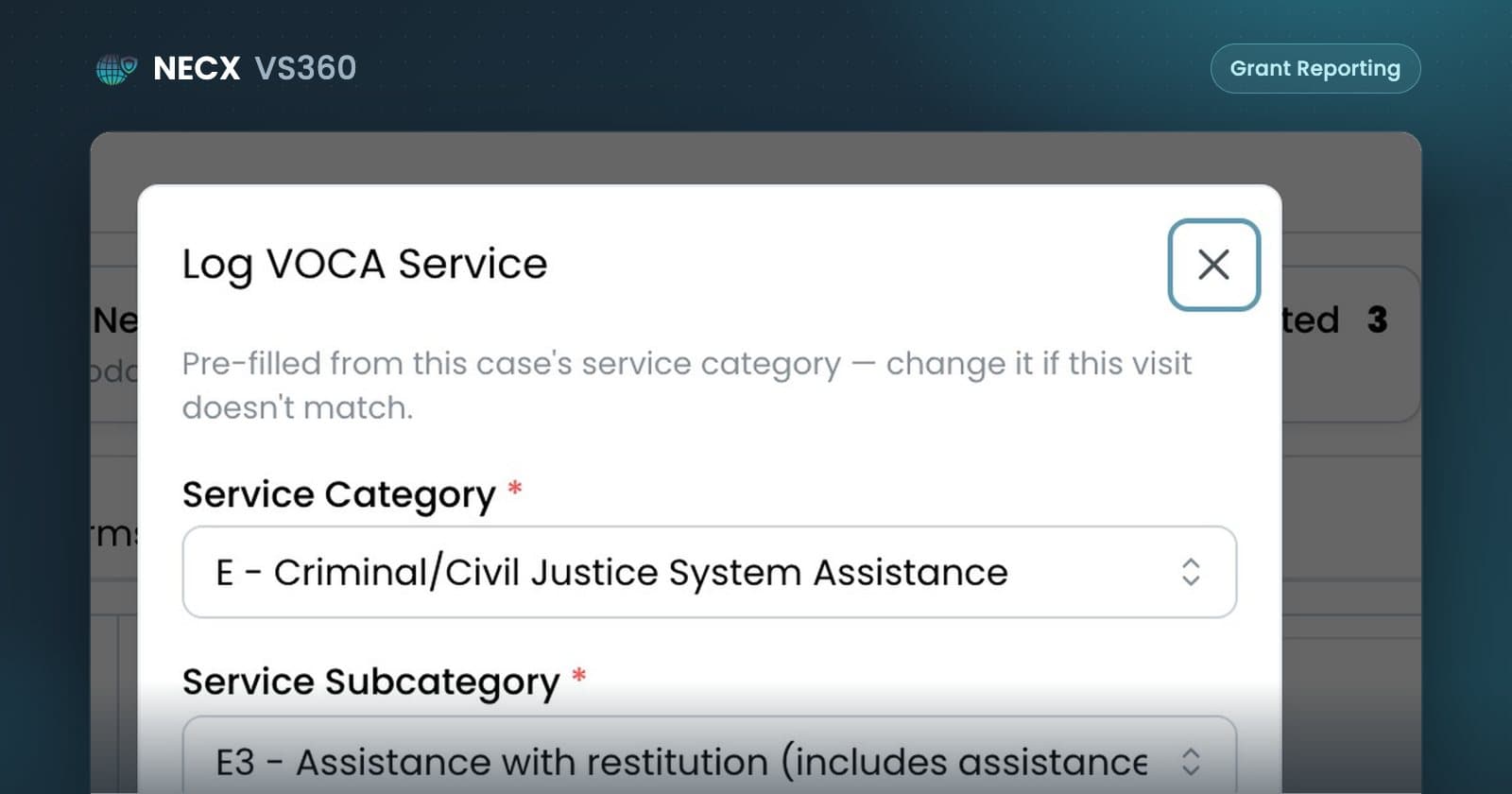
VOCA Grants Explained: How Victim Assistance Funding Works and What It Requires
Where VOCA money comes from, how it reaches local programs, what it pays for, and the reporting and confidentiality rules every VOCA subrecipient has to meet.